
The Quick Answer, By Area
If you only read one section, read this one. These are the schedules that hold up on the properties we clean around Sarasota and Manatee County, not a generic national average:
- Driveways and walkways generally need a wash once a year. Shaded, humid, or low-traffic areas can develop algae and mildew faster and may need a second cleaning.
- The house exterior, siding and stucco, holds up on that same once-a-year schedule. Homes in shaded, humid, or coastal areas can develop mold and mildew faster and may need it more often to keep that fresh, just-painted look.
- Windows, inside and out, typically need cleaning once or twice a year. Homes near water, under trees, or that catch a lot of pollen and salt spray often benefit from more frequent visits.
- A roof soft wash once a year is what keeps algae streaking from ever getting bad enough to notice.
- Gutters are worth clearing once a year, ideally before the summer rainy season. Homes with a lot of overhanging trees often need it twice a year to prevent clogs and overflow. See our guide to warning signs your gutters are about to overflow.
- Lanai and pool cage screens generally need attention once or twice a year. Screens near trees, lakes, or landscaping collect pollen, cobwebs, and dirt faster.
Think of these as a starting point, not a fixed rule. The next section explains what moves your home toward the more frequent end.
What Makes Florida Different
A schedule built for a drier, milder climate doesn't hold up here. A few things push Sarasota-area homes toward the shorter end of the timeline:
- Humidity and rain cycles keep things wet, and algae, mold, and mildew need moisture to grow, so Florida rarely goes long without giving them what they need. Surfaces that stay damp longer, like shaded siding, north-facing walls, or areas under tree cover, grow buildup faster than surfaces that dry out quickly in the sun.
- Intense UV exposure breaks down sealers and paint faster than a milder climate would, so those protective layers wear thin sooner and let grime take hold more easily.
- Salt air is a factor too. Homes closer to the coast deal with salt spray that speeds up staining and corrosion on top of the usual algae and mildew.
- Sprinklers play a part as well: irrigation systems that hit the driveway, walkway, or lower siding leave the same kind of mineral deposits that stain glass and keep those spots damp longer than the rest of the property.
- Hurricane season adds another wrinkle. Atlantic hurricane season runs June through November, and storms leave behind debris, standing water, and organic buildup that can call for a cleaning outside your normal schedule, regardless of when the last one happened.
Signs It's Time (Before You Hit the Calendar)
A schedule is a useful default, but your home will usually tell you before the calendar does. Here's what to look for.
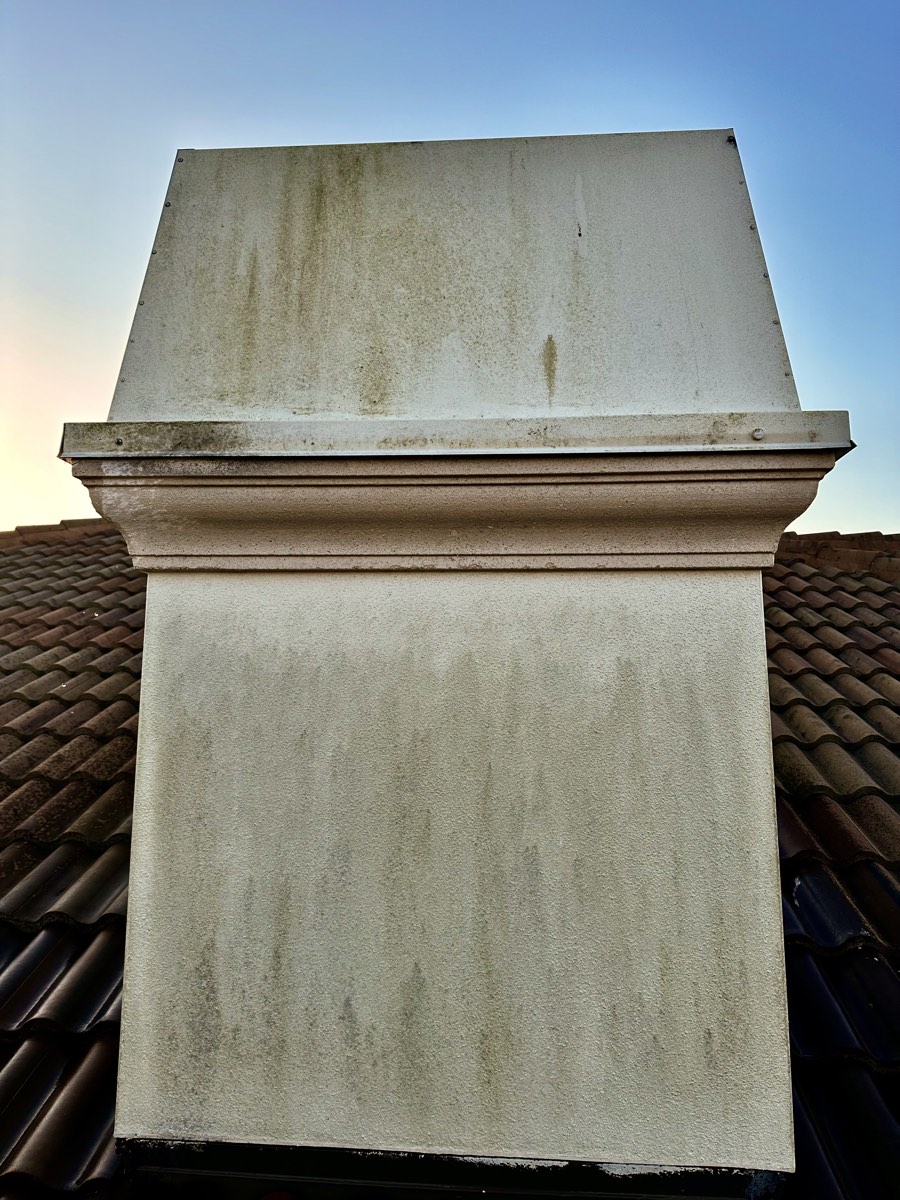
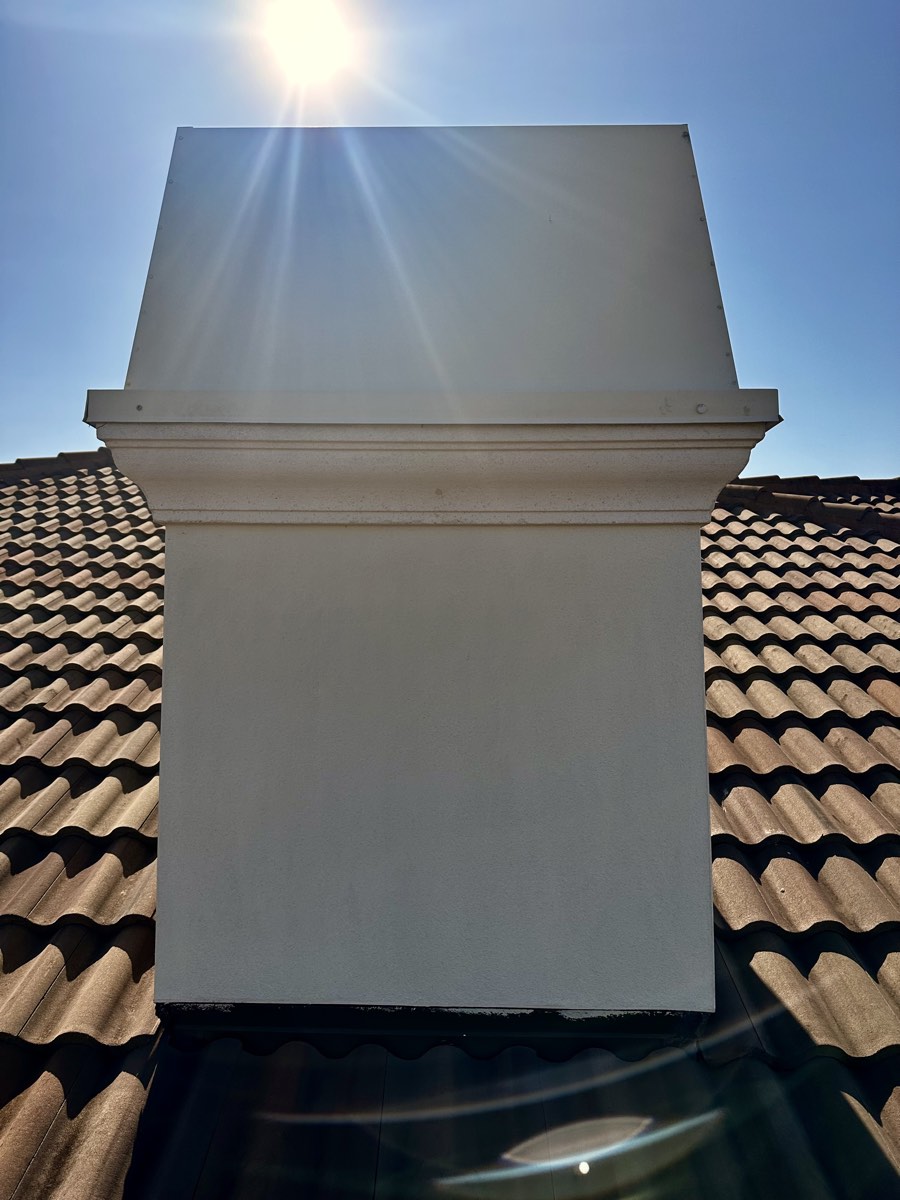
On a chimney, roofline, or any north-facing surface that stays shaded, algae shows up as dark streaking that starts subtle and gets more obvious over months, not days:
Up close, that same buildup shows up on window sills, screens, and tracks as a green or black film that a quick wipe won't fully remove:
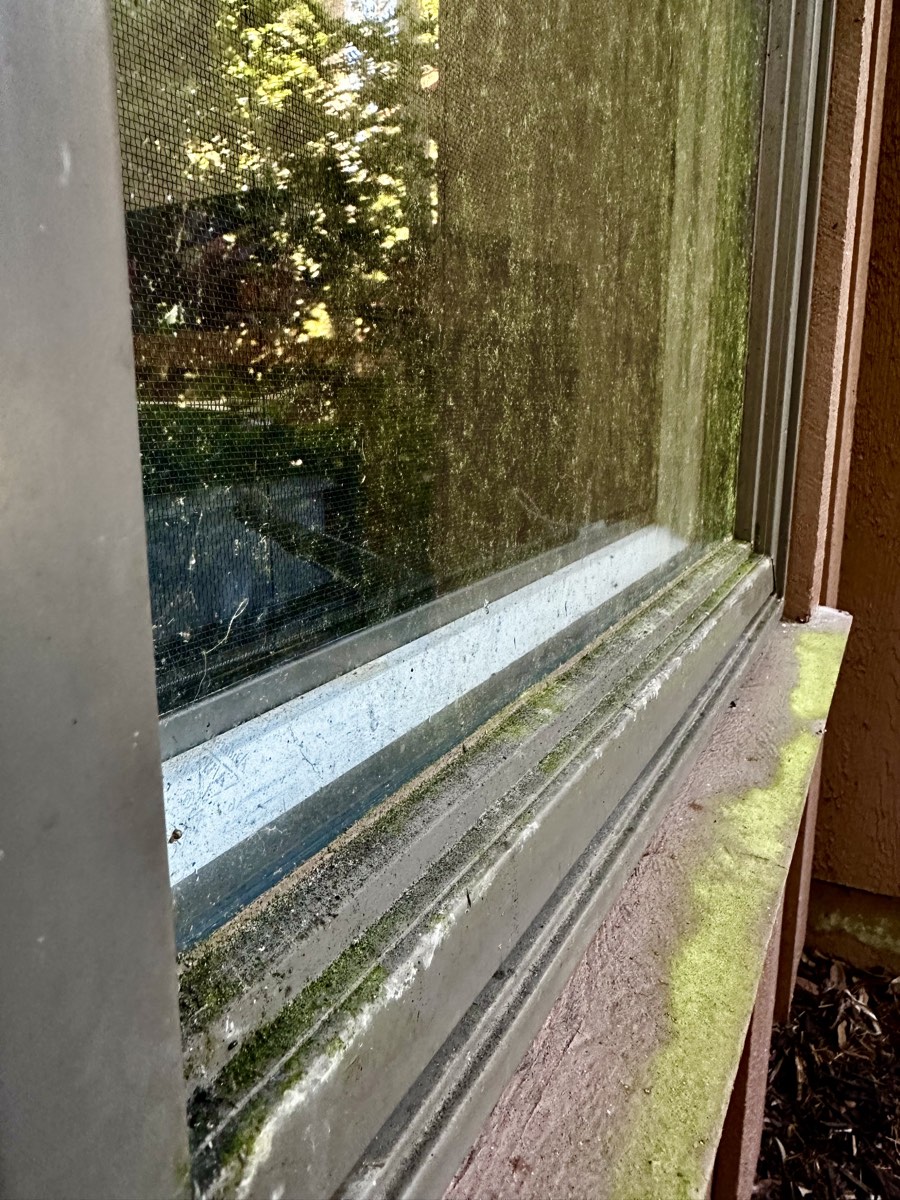
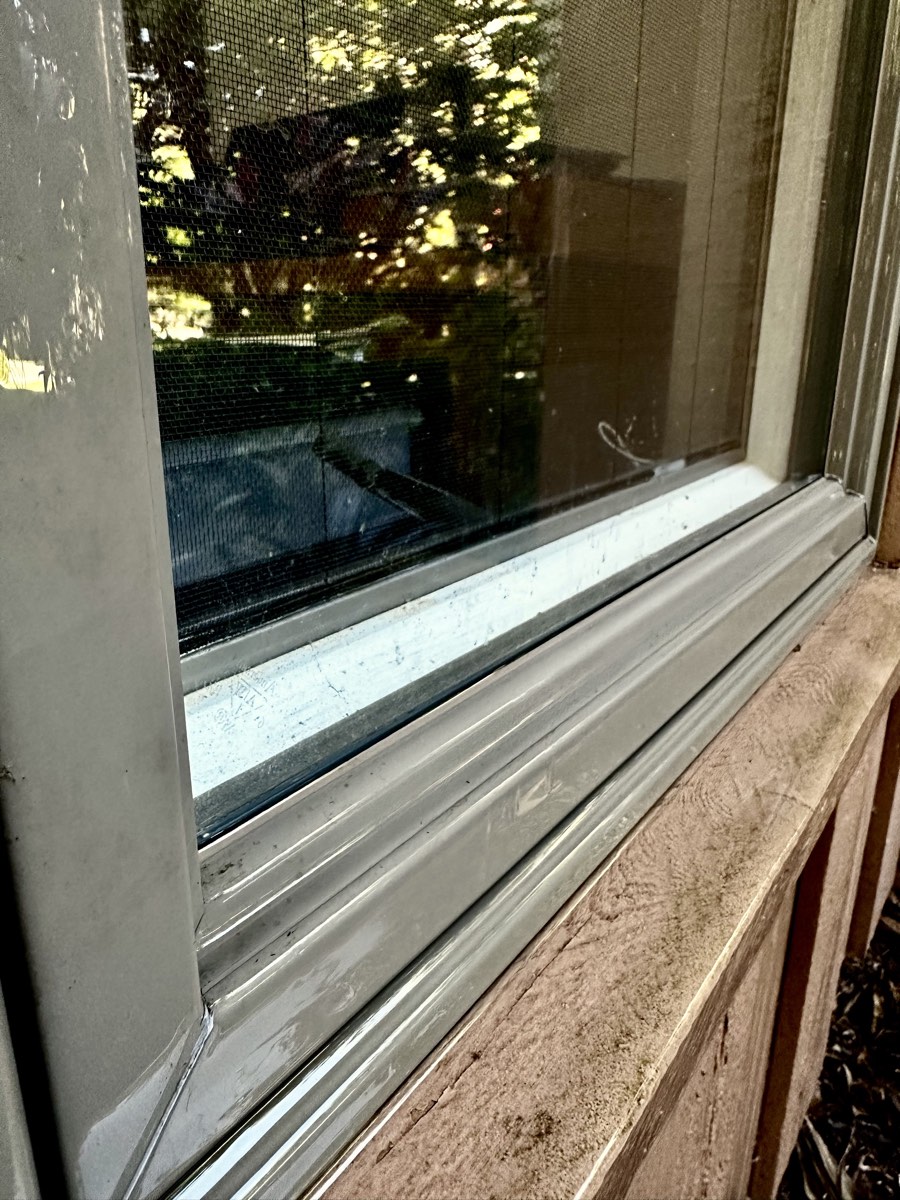
Elsewhere on the property, watch for a driveway or walkway that's gone from gray to green or black (especially anywhere shaded), pavers that feel slick or slippery when wet, and lanai screens that look permanently hazy no matter how much daylight is behind them. Any of those showing up is a better trigger than waiting out a fixed number of months.
Why Sealed Pavers Buy You Extra Time
Sealing pavers still means cleaning them eventually, it just slows how fast algae and grime take hold, and makes the buildup that does form much easier to rinse away instead of scrubbing it out of porous, unsealed stone. If your pavers already feel rough or porous, or they've started absorbing water quickly instead of beading it up, that's usually a sign the sealer has worn thin, and it's worth pairing your next cleaning with a fresh coat. See our guide to how often to reseal pavers in Florida for the full timeline, or our paver cleaning & sealing page for pricing.
The Easiest Way to Stay on Schedule
Most homeowners don't want to track six different timelines for six different surfaces, which is exactly why our Window Care Plans and Home Care Plans exist. Each plan is built around these same cadences, roof and house washes once a year, windows once or twice, gutters before rainy season, so it happens automatically instead of depending on you remembering to call. If your property runs faster than average (shaded, coastal, heavy tree cover), we can build a plan around that too. See our guide to choosing a Window Care Plan tier for the window-specific side of it.
Pressure Washing Frequency FAQs
Is once a year really enough pressure washing for a Florida home?
For most surfaces on most properties, yes. Once a year is enough to stay ahead of algae, mildew, and grime before it becomes visible or starts to etch into the surface. Homes that are shaded, close to water, under heavy tree cover, or catch a lot of sprinkler overspray usually need a second visit for at least one surface, like the driveway or a north-facing wall that never fully dries.
Can pressure washing too often damage stucco, pavers, or paint?
Method matters more than frequency here. High pressure used on the wrong surface, like painted siding, stucco, or roofing, can strip paint, force water behind siding, or damage shingles regardless of how often it's done. That's why we soft wash the house and roof (low pressure plus a cleaning solution) and reserve true pressure washing for hardscapes like driveways, walkways, and pavers, which can handle it.
What's the difference between pressure washing and soft washing?
Pressure washing uses high-pressure water and works well on concrete, pavers, and other hardscapes. Soft washing uses low pressure plus a cleaning solution, and it's what we use on roofs, siding, and stucco, since high pressure on those surfaces can strip roof granules or force water where it doesn't belong. Same goal, different tool for the surface. See our full guide to pressure washing vs. soft washing for which method your home needs.
What's the best time of year in Sarasota to schedule pressure washing?
Late spring, before hurricane season's heaviest rain and humidity, is a strong default: it clears the year's buildup and gives surfaces a clean start before the wettest months. That said, don't wait on a fixed calendar if a storm leaves behind debris, mold, or staining outside your normal schedule. It's also fine to clean before selling a home or hosting an event, regardless of when the last visit was.