The Short Answer
Pressure washing uses high-pressure water alone to blast dirt off a surface. Soft washing uses low pressure plus a cleaning solution that kills algae, mold, and mildew at the root. Concrete, pavers, and brick can take the force of pressure washing. Roofs, siding, stucco, screens, and painted surfaces can't. High pressure on those surfaces causes real damage, not just a risk of it.
What Is Pressure Washing?
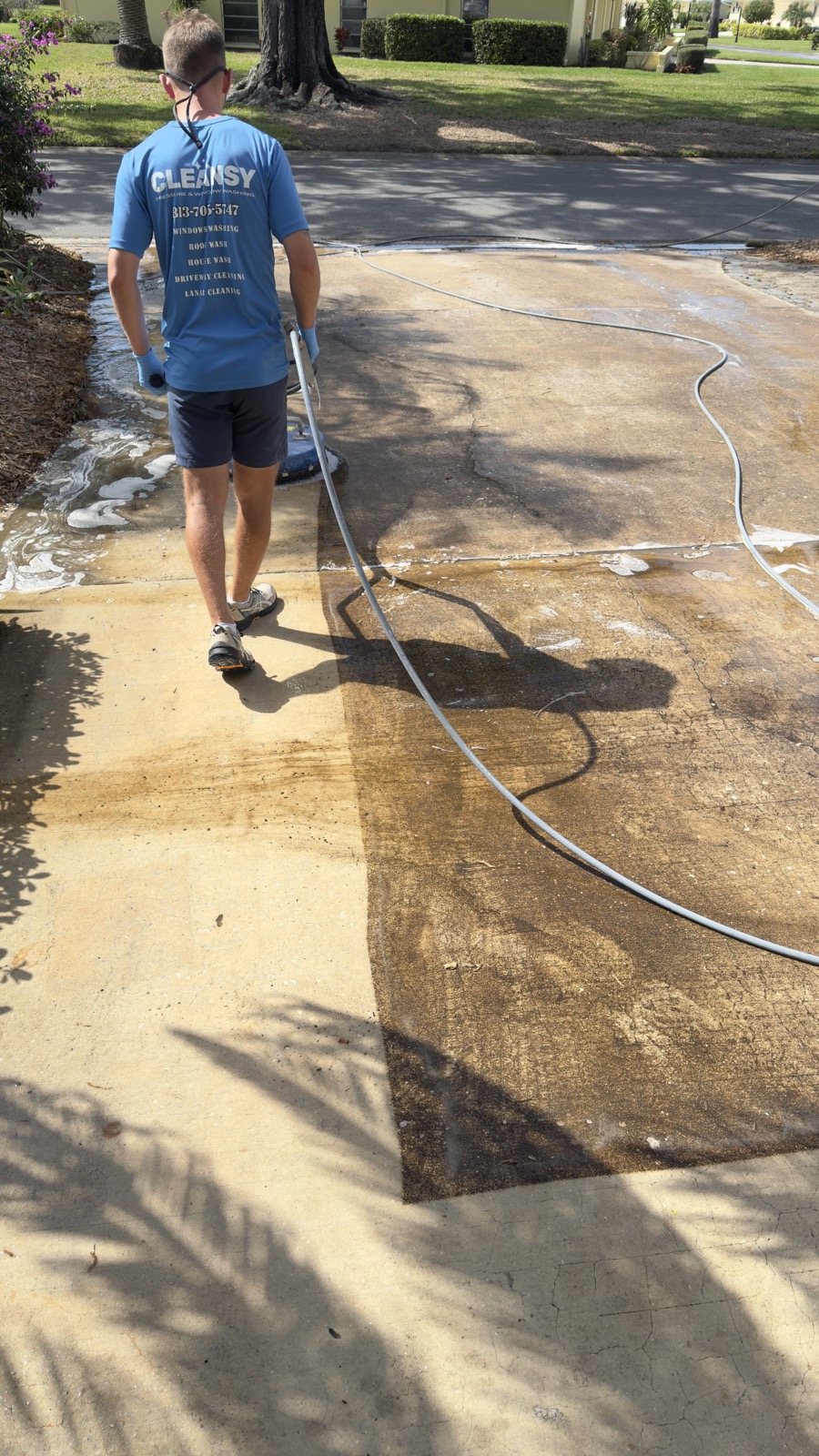
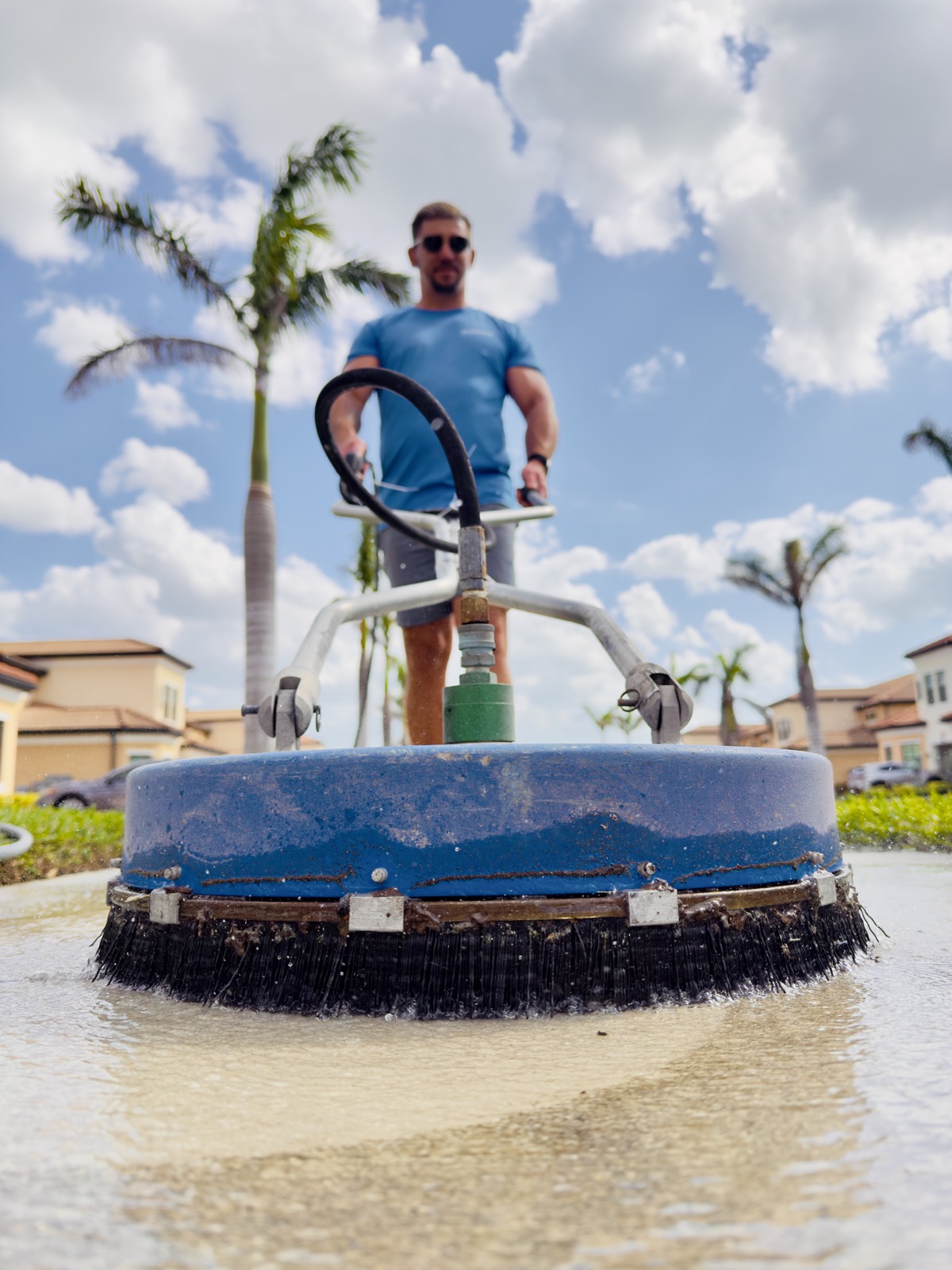
Pressure washing forces water out at high PSI, using mechanical force to physically strip dirt, grime, and staining off a hard surface. For large flat areas like driveways and pool decks, that usually means a rotary surface cleaner attachment: a spinning disc with jets underneath that covers the ground evenly instead of leaving the arcing marks a single wand leaves behind.
It's the right call for surfaces that are genuinely hard and non-porous enough to take that force: concrete, pavers, brick, and most sidewalks and driveways. On those surfaces, pressure is what lifts ground-in dirt and staining that a chemical alone won't fully remove.
What Is Soft Washing?
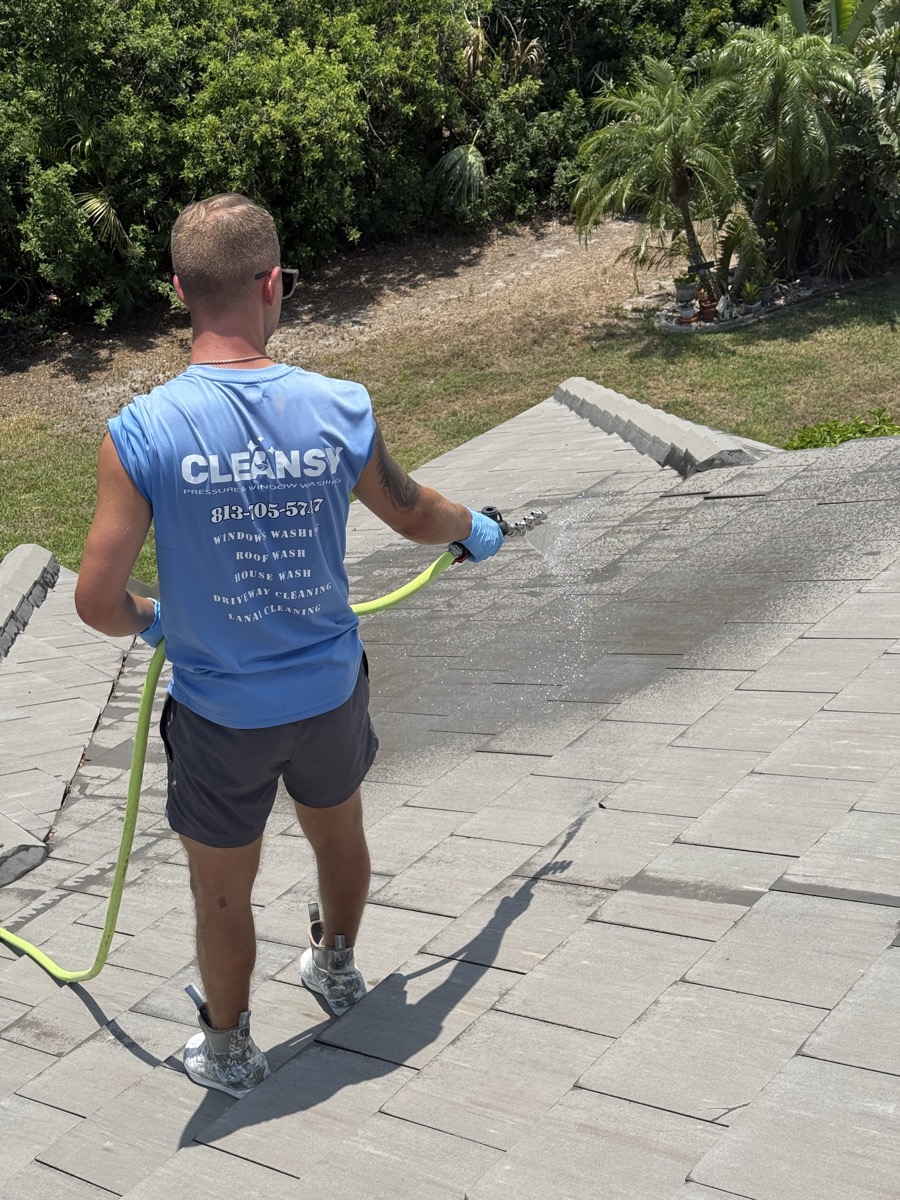
Soft washing uses pressure closer to a garden hose than a pressure washer, paired with a cleaning solution formulated to kill the algae, mold, or mildew causing the staining. The solution does the work, not the force. It breaks down the organism at the root, and a low-pressure rinse carries it away. Because it doesn't rely on force, it's safe on surfaces that pressure washing would tear into: roof shingles and tile, siding, stucco, screens, and painted surfaces. Sarasota's humidity keeps that algae and mildew growing nearly year-round, which is exactly why soft washing shows up so often on Gulf Coast homes.
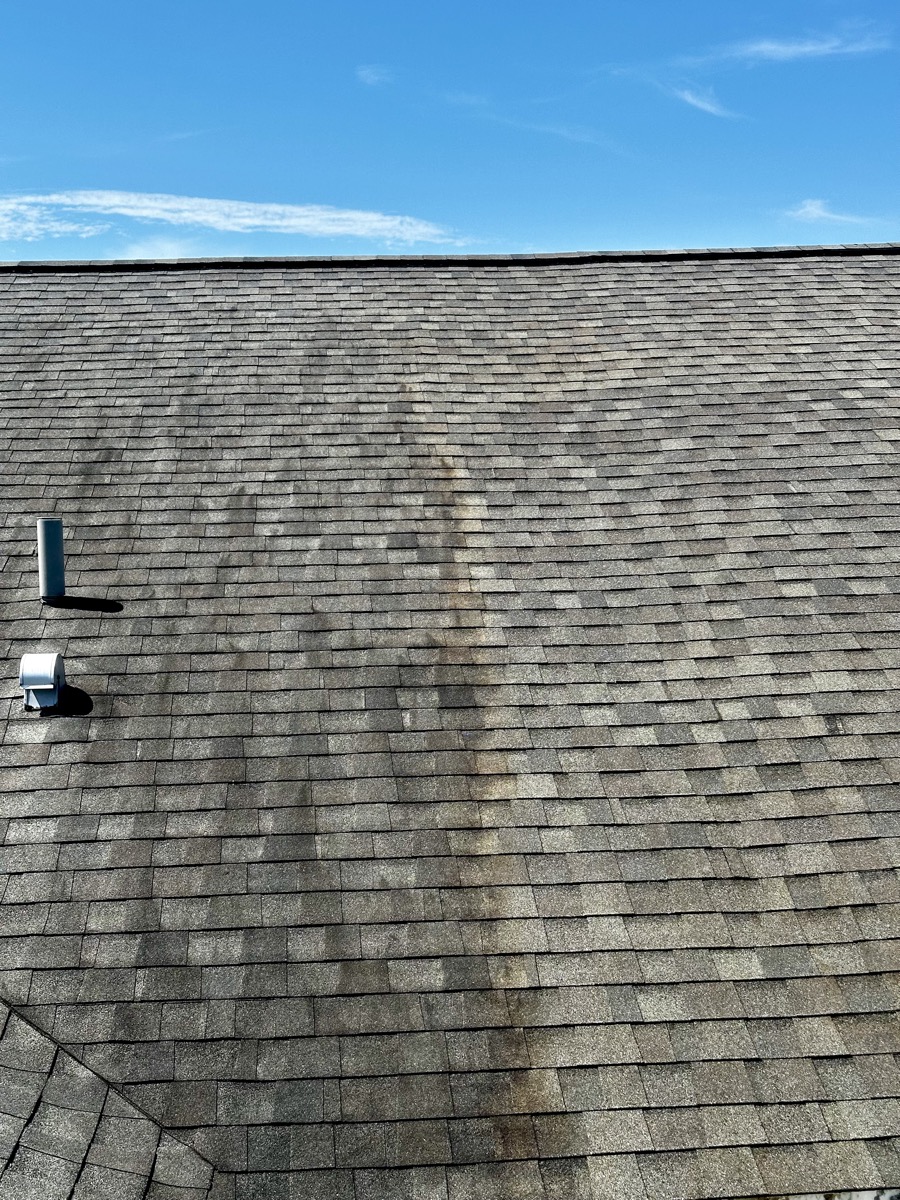
Why Using the Wrong One Damages Your Home
The Asphalt Roofing Manufacturers Association is direct about this: never use a pressure washer on an asphalt shingle roof. ARMA's own guidance states it causes granule loss and very likely premature failure of the roof system. Those granules are the roof's actual UV and weather protection, and once they're gone, they don't come back. The same force that strips shingles can also drive water behind siding and soffits, crack or etch stucco, and blow out window screens.
It runs the other way too: soft washing a filthy driveway won't fully lift ground-in oil stains or years of packed dirt the way real pressure will. Each method exists because the other one doesn't work everywhere.
Quick Reference: Which Surfaces Need Which
- Pressure washing: driveways, walkways, pool decks, pavers, most concrete and brick.
- Soft washing: roofs (shingle, tile, or metal), siding, stucco, screens and lanai cages, and painted surfaces.
Our guide to how often to pressure wash a Florida home breaks down realistic schedules for each of these by surface, once you know which method applies.
What Cleansy Does For You
We don't run one method across the whole property. Hardscapes get true pressure washing; the roof, siding, and screens get soft washed. Which method touches which surface isn't a judgment call made on-site. It's decided before we ever show up, based on what the surface is. Same standard whether it's a home in Sarasota, Manatee County, or our Southwest Florida service area.
Pressure Washing vs. Soft Washing FAQs
Is soft washing as effective as pressure washing?
For what it's designed to do, yes: soft washing kills algae, mold, and mildew at the root using a cleaning solution, so it doesn't grow back as fast as a plain rinse would. It's not designed to blast off ground-in dirt or oil stains on concrete, which is a job for actual pressure.
Can pressure washing damage my roof?
Yes. The Asphalt Roofing Manufacturers Association explicitly warns against ever using a pressure washer on an asphalt shingle roof, since it strips the protective granules and can cause premature roof failure. Soft washing is the recommended method for roof algae and staining.
How do I know if a company is soft washing or pressure washing my house?
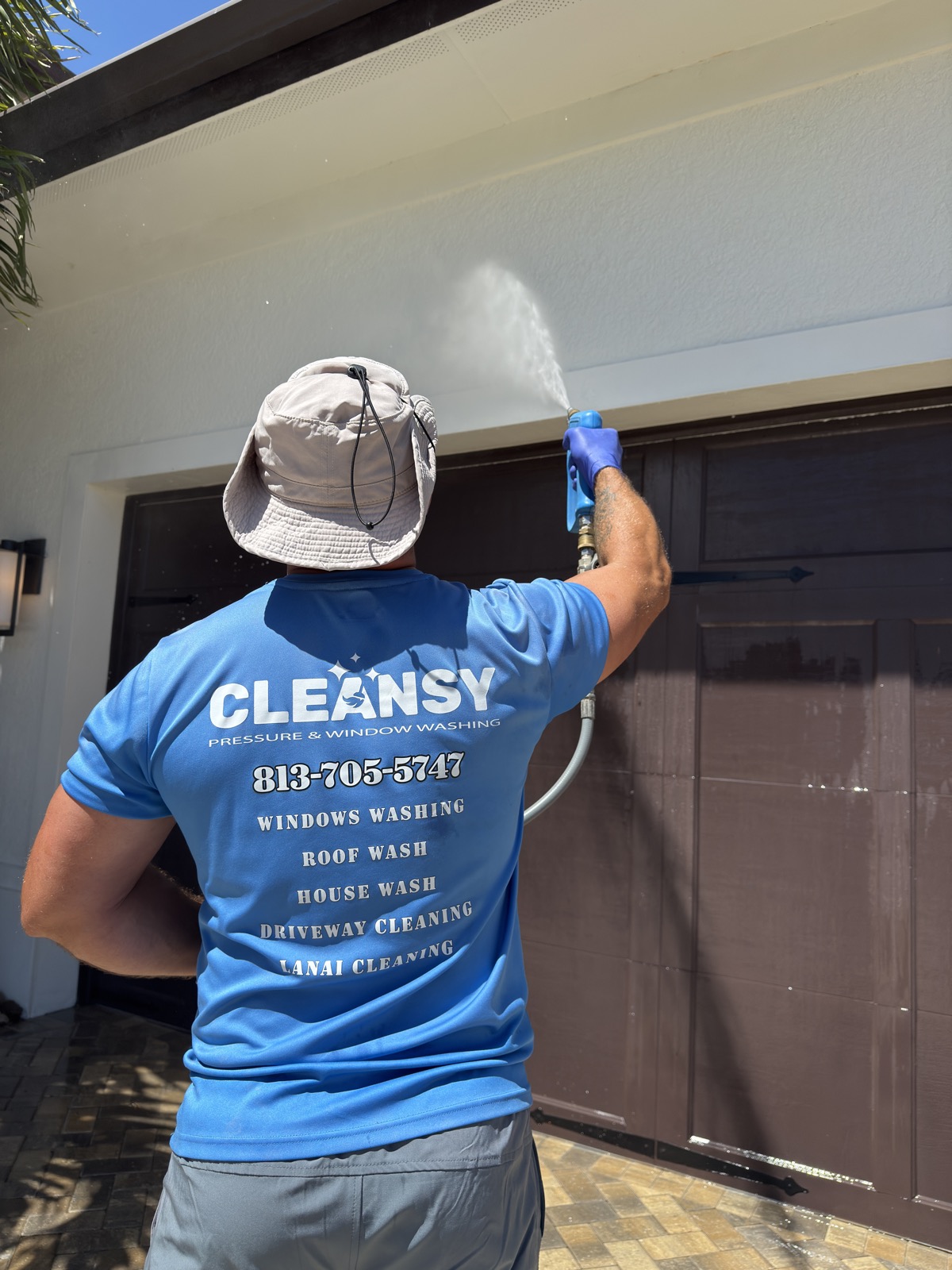
Watch the equipment and the spray. Pressure washing uses a narrow, forceful jet or a spinning surface cleaner attachment. Soft washing uses a wide, low-pressure fan spray, closer to a garden hose than a pressure washer, applying a cleaning solution rather than relying on force.
Does Cleansy pressure wash or soft wash driveways?
Driveways, walkways, and pool decks get true pressure washing, since concrete and pavers can handle it and it's what lifts ground-in dirt and staining. We soft wash the roof, siding, stucco, and screens instead.