
The Warning Signs, Before It Actually Overflows
An overflow rarely shows up out of nowhere. In most cases, the signs are there weeks ahead of time, if you know where to look:
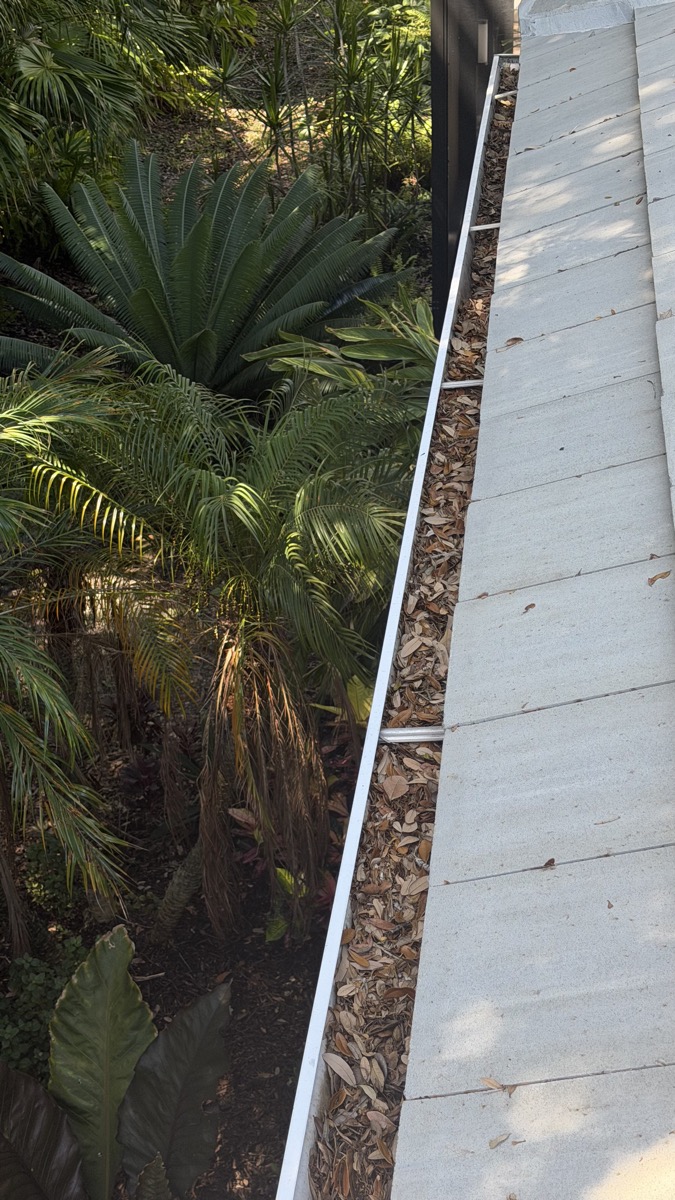
- Debris visible over the lip: if you can see leaves, seed pods, or sludge from the ground without climbing anything, the gutter is likely already at or near capacity.
- Sagging or pulling-away sections: waterlogged debris is heavy, and a gutter that's started to sag or separate from the fascia is carrying more weight than it's supposed to.
- Streaking or staining on the siding below the seams, which usually means water is already finding its way over the edge or through a joint instead of running to the downspout.
- Plants or weeds sprouting from inside the gutter, a sign that enough organic material has broken down in there to function as soil.
- Water sheeting off the roofline during rain instead of channeling through the downspout, one of the clearest signs an overflow is already happening.
- Puddling near the foundation after a storm that wasn't there before, especially right under a downspout.
Why Sarasota Gutters Clog Faster Than Most
Florida doesn't really have a single "leaf season" the way northern climates do. Live oaks drop leaves nearly year-round, and palms shed fronds and seed pods on their own schedule, so debris accumulates steadily instead of in one predictable fall cleanup. Florida also averages about 53.7 inches of rain a year, with most of it packed into June through September, exactly the months that put the most volume through a gutter system that's already carrying a season's worth of buildup.
Humidity speeds up what's already in there, too. Wet leaves and organic debris compact and start to break down faster in Florida's heat than they would in a drier climate, turning a pile of leaves into a dense, water-holding sludge that's harder to flush out and slower to dry.
What Actually Happens If You Wait
A clogged gutter isn't just a cosmetic problem. Left alone, it changes where water goes, and where it ends up next matters:
- Water soaks the fascia and siding instead of the downspout. Once a gutter is full, rain overshoots it and runs straight down the trim and wall below, which invites wood rot over time instead of routing water safely away.
- Standing water breeds mosquitoes. The EPA specifically lists clogged rain gutters among the standing-water spots to clear to prevent mosquito breeding, and it doesn't take much water sitting for more than a few days.
- Foundation erosion: overflow dumps water right next to the house instead of carrying it away, and repeated soaking at the foundation line can erode soil and contribute to settling over time.
- Rust and corrosion at seams and downspout elbows from water sitting against metal joints instead of draining through, especially on older gutter systems.
- Gutters pulling away or collapsing under the added weight of waterlogged debris, which turns a cleaning job into a repair job.

How Often Gutters Actually Need Cleaning in Florida
Once a year is the baseline, ideally scheduled before the summer rainy season starts so the system has full capacity when it's needed most. If your property has a lot of oak or palm cover, twice a year keeps you ahead of it instead of catching up after the fact. We cover this alongside the rest of a home's exterior maintenance schedule in our guide to how often to pressure wash a Florida home.
What Cleansy Does For You
We clean and flush gutters and downspouts as part of our regular service, checking that water actually runs through to the downspout and out, not just clearing what's visible from the ground. If we spot a sagging bracket, a separated seam, or a downspout that's come loose while we're up there, we'll always point it out. We don't repair or replace gutters ourselves, but we'd rather you know about a problem early than find out when it fails during a storm.
We also offer gutter brightening for gutters that are structurally fine but look dull, streaked, or oxidized rather than actually clogged, a separate service from a standard cleaning aimed at restoring the finish rather than clearing debris.
If staying ahead of it sounds better than remembering to call every year, our Home Care Plans schedule gutter cleaning alongside the rest of your home's exterior maintenance, timed before rainy season instead of after the first overflow. Already having your windows done? Gutter cleaning is easy to add to the same visit: see what's actually included in a Cleansy window cleaning for the rest of what we cover.
Gutter Overflow FAQs
How do I know if my gutters need cleaning?
Look for debris visible over the lip, sagging sections, streaking or staining on the siding below the gutter seams, plants sprouting from inside the gutter, or water sheeting off the roofline during rain instead of channeling into the downspout.
How often should gutters be cleaned in Florida?
Once a year is the baseline, ideally before the summer rainy season. Properties with a lot of oak or palm tree cover often need it twice a year to keep up.
Can clogged gutters actually damage my foundation?
Yes. When gutters overflow, water dumps straight down next to the house instead of being carried away through the downspout. Repeated soaking right at the foundation line can erode soil and contribute to settling over time.
Does Cleansy repair gutters, or just clean them?
We clean and flush gutters and downspouts as part of our regular service. We don't repair or replace gutters ourselves, but if we spot a sagging bracket or a separated seam while we're up there, we'll always point it out.
What is gutter brightening?
Gutter brightening restores the finish on gutters that look dull, streaked, or oxidized even though they aren't actually clogged. It's a separate service from a standard cleaning, since it's addressing the look of the gutter face itself rather than clearing debris.