
The Quick Answer
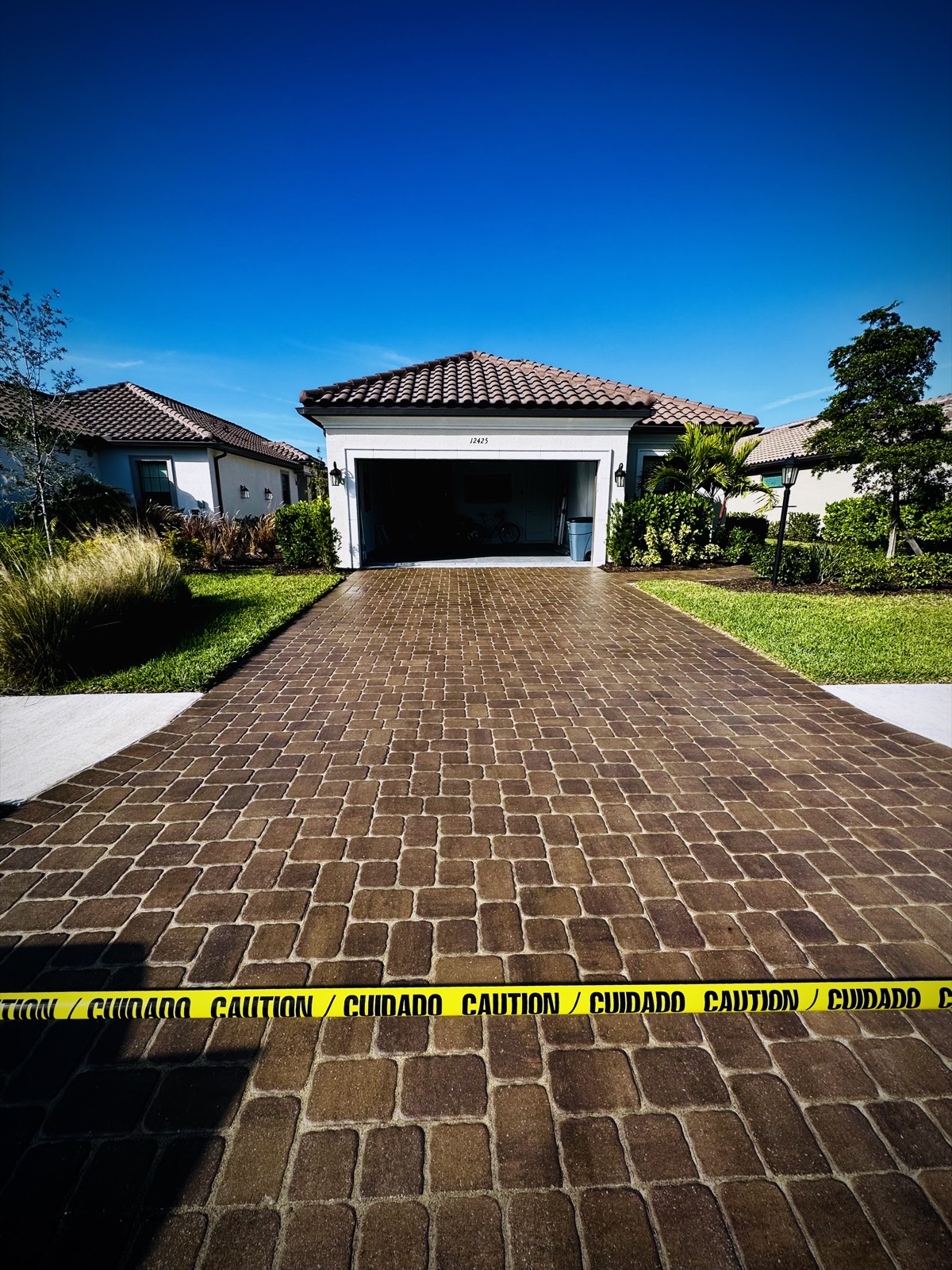
Most quality sealants hold up two to three years on Sarasota-area pavers before they need to be reapplied. Where you land in that range depends on sun and traffic: a shaded walkway that barely sees a car can stretch toward the longer end, while a south-facing driveway or an unshaded pool deck in full sun all day is usually closer to two years.
If you're not sure where your pavers stand right now, there's a simple test. Splash some water on the surface. If it beads up, the sealer's still doing its job. If it soaks in instead, that's the clearest sign it's worn through.
What Sealing Actually Protects Against
Bare pavers are directly exposed to three things Florida has in abundance: intense sun, heavy seasonal rain, and whatever gets tracked, dripped, or blown onto them. A quality sealer creates a barrier that keeps oil, rust, tannin stains, and everyday dirt from working into the paver's surface, and helps keep the sand in the joints from washing out every time it rains hard.
Sealing also changes how a common paver issue shows up: efflorescence, the white, chalky haze that can form on concrete pavers as moisture pulls natural mineral salts to the surface. According to the Concrete Masonry & Hardscapes Association, it's a cosmetic issue rather than a structural one, but it's more noticeable on darker pavers, which is exactly where sealing makes the biggest visual difference. The order matters here: any existing efflorescence or staining needs to be cleaned off first, not sealed over, or it just gets trapped underneath.
Signs Your Pavers Need Resealing
A few things tend to show up before a driveway looks obviously worn:
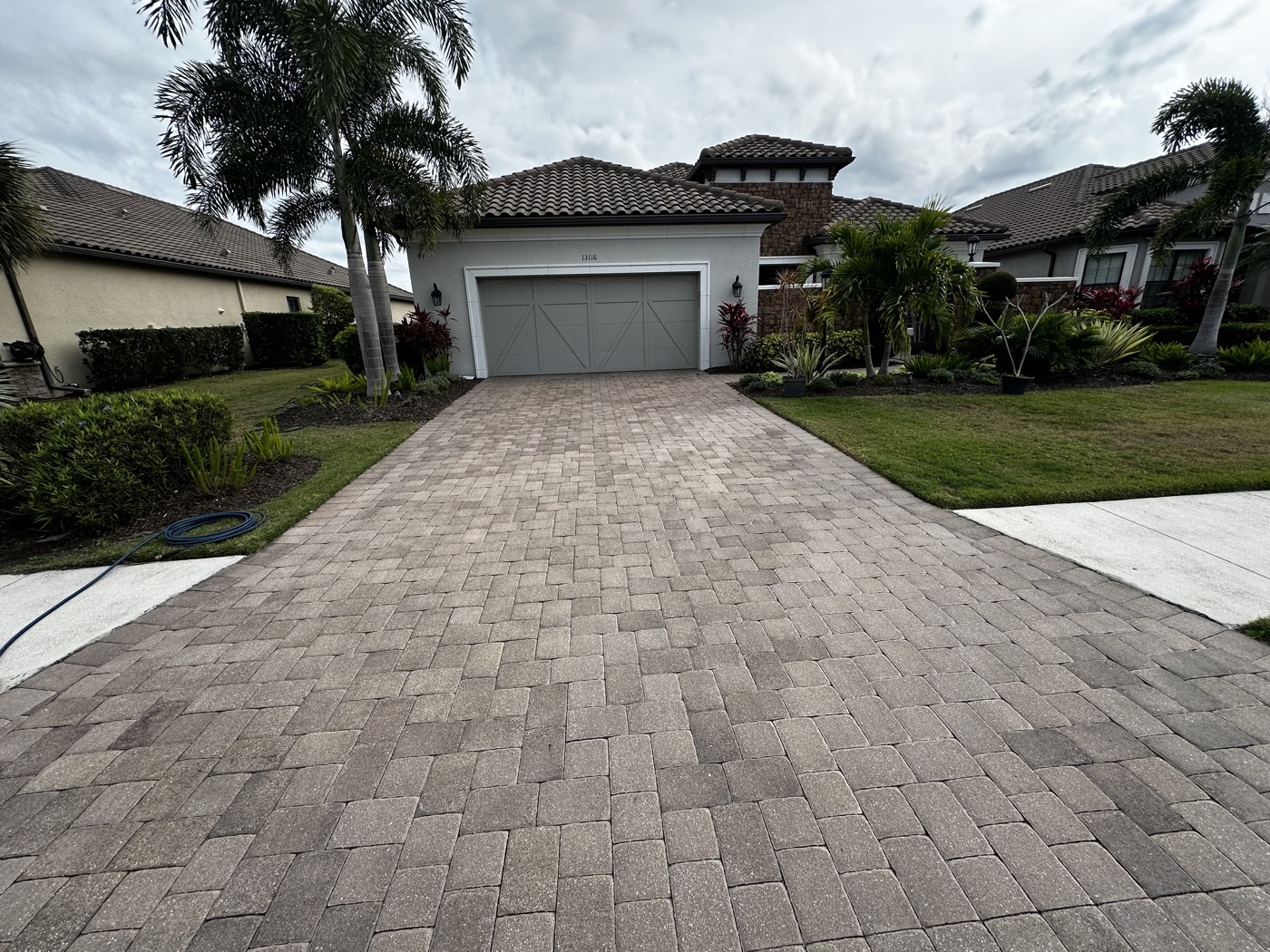
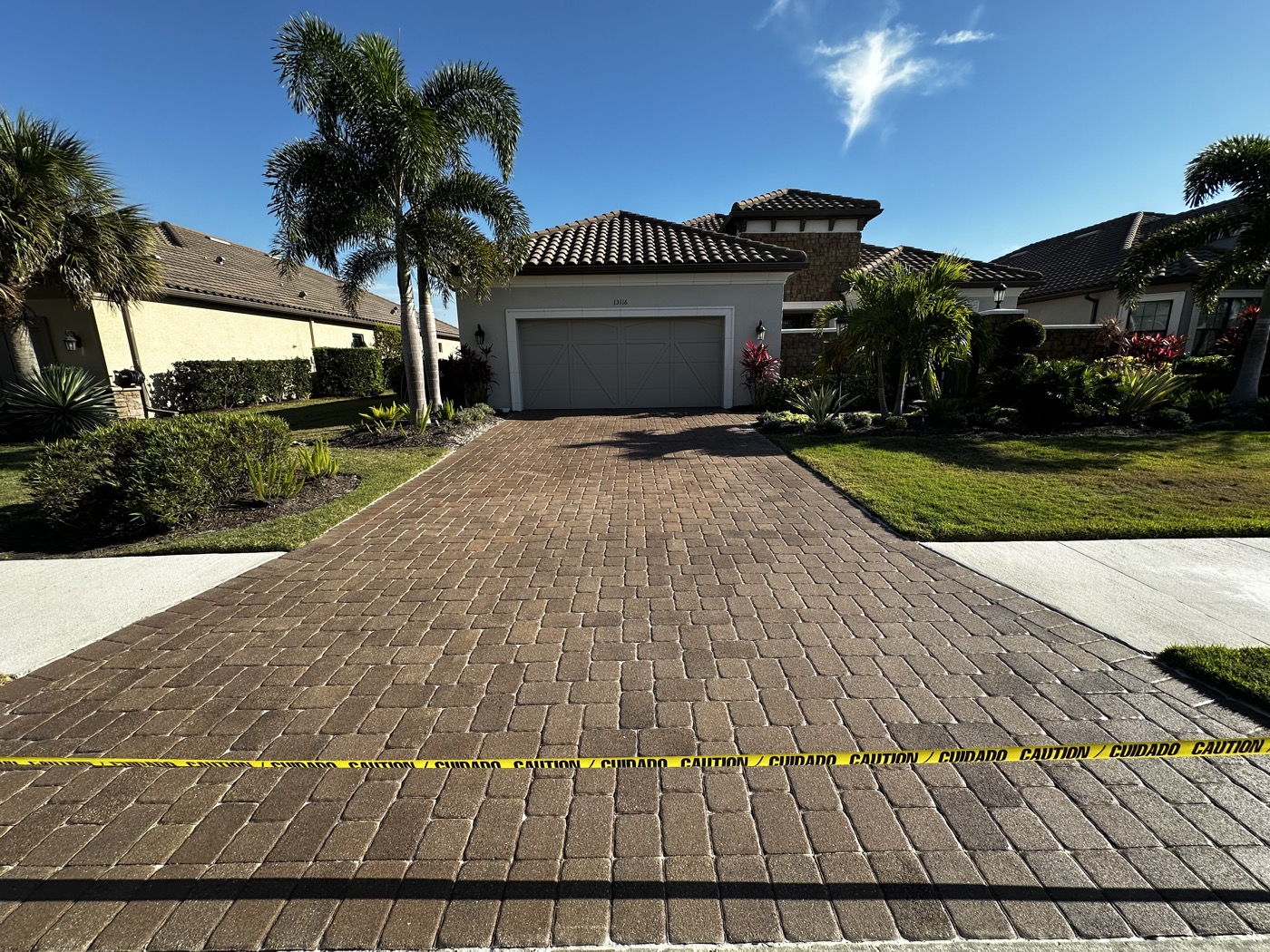
- Water stops beading on the surface after rain and soaks in instead, the single clearest sign the sealer has worn through.
- Color looks flat or chalky, especially compared to a spot that gets less traffic or sun.
- Joint sand looks lower than it used to, or small weeds and ants start using the gaps between pavers.
- An occasional stain, grease, leaves, mildew, leaves a mark that soap and water alone won't fully lift.
What Happens If You Skip It
Skipping a reseal doesn't ruin a driveway overnight, but a few things compound the longer it goes:
- Stains set in deeper and get harder, sometimes impossible, to fully lift once they've had bare, porous paver to soak into.
- Joint sand keeps washing out with every heavy rain. Without it, pavers can start to shift, rock, or settle unevenly, since that sand is part of what locks the whole surface together.
- Weeds get an easier foothold in the gaps, and established roots do more than look bad. They can pry joints open further.
- Color fades unevenly rather than all at once, so a driveway tends to go from looking new to looking patchy and worn, rather than aging gracefully.
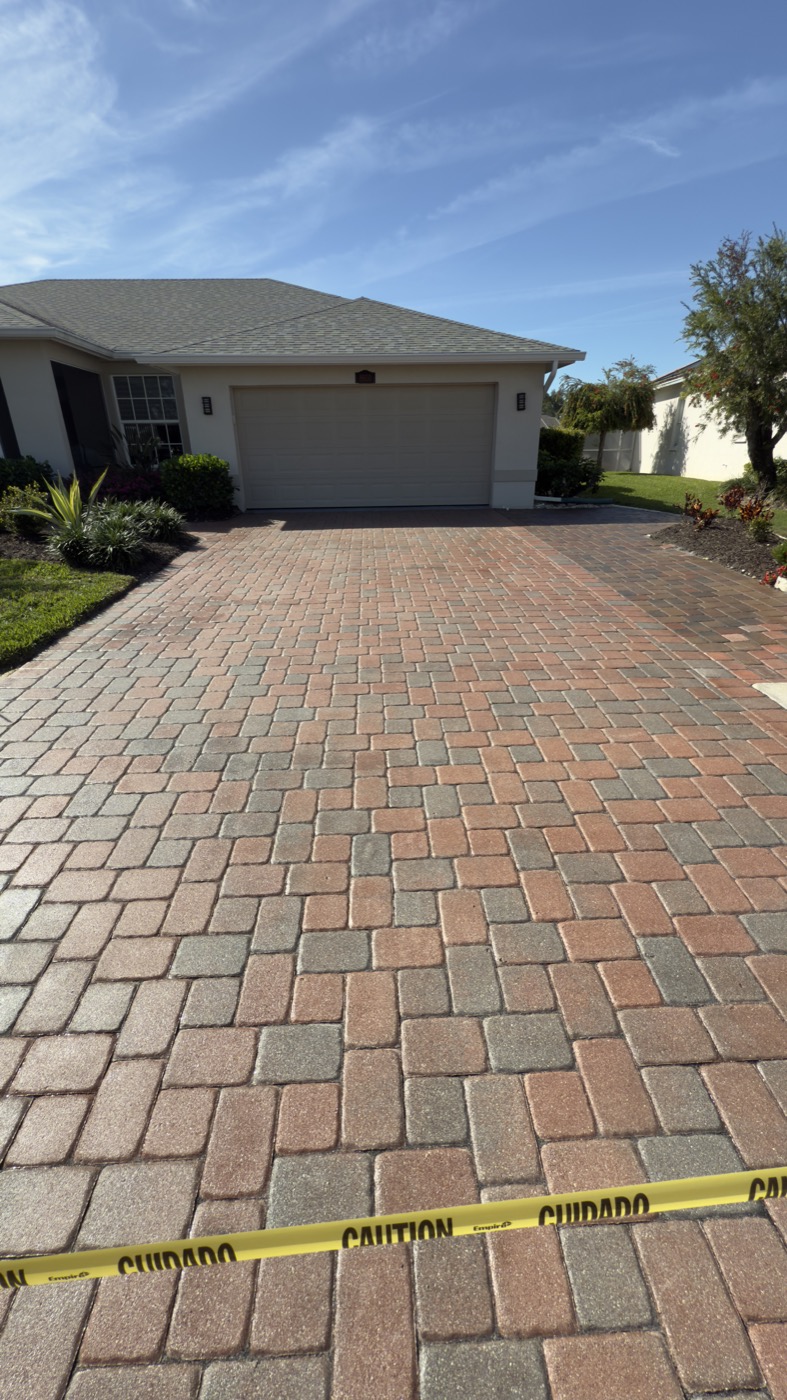
How Resealing Actually Works
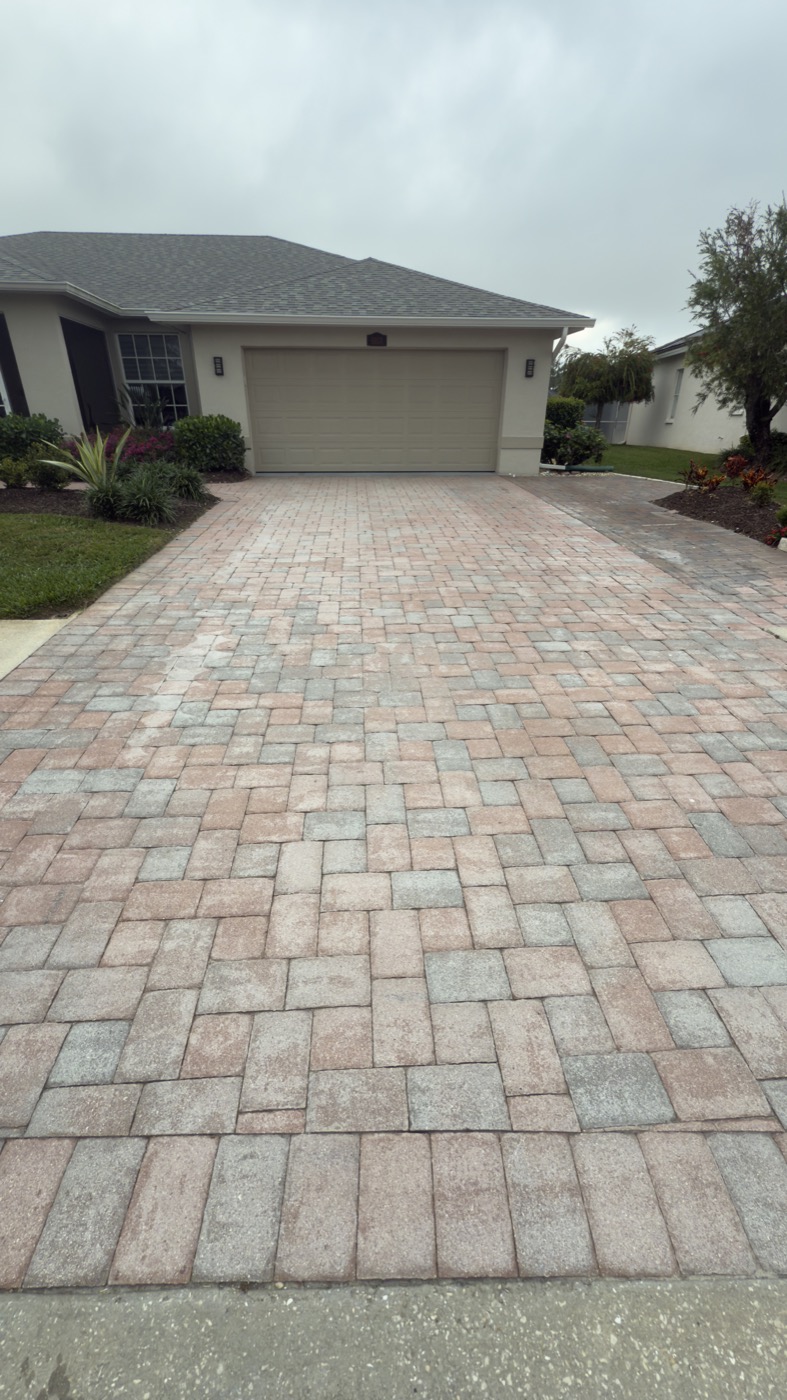
Cleaning comes before anything else. Pressure washing lifts dirt, algae, and old, worn sealant residue that would otherwise trap moisture under a new coat. Any joints that have lost sand get re-sanded at this stage too, since sealing over a gap doesn't fix it.
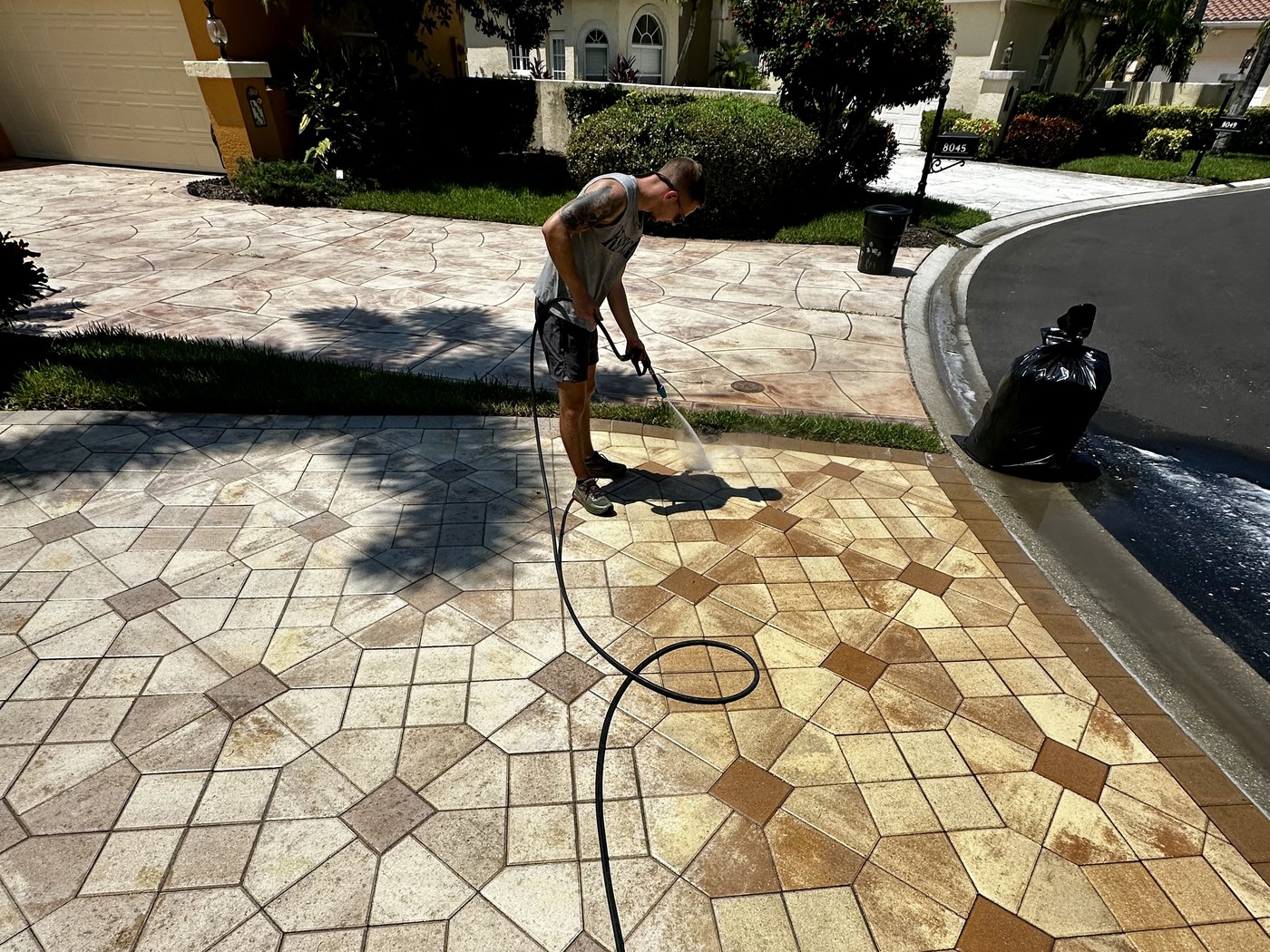
Once the surface is fully clean and dry, sealer goes on in an even coat, a step worth getting right since a rushed or uneven pass shows up later as blotchy sheen or missed spots. Sealants come in different finishes, from a natural matte look to an enhanced "wet look" that deepens color and adds shine. Which one makes sense usually comes down to the paver color and the look you're going for.
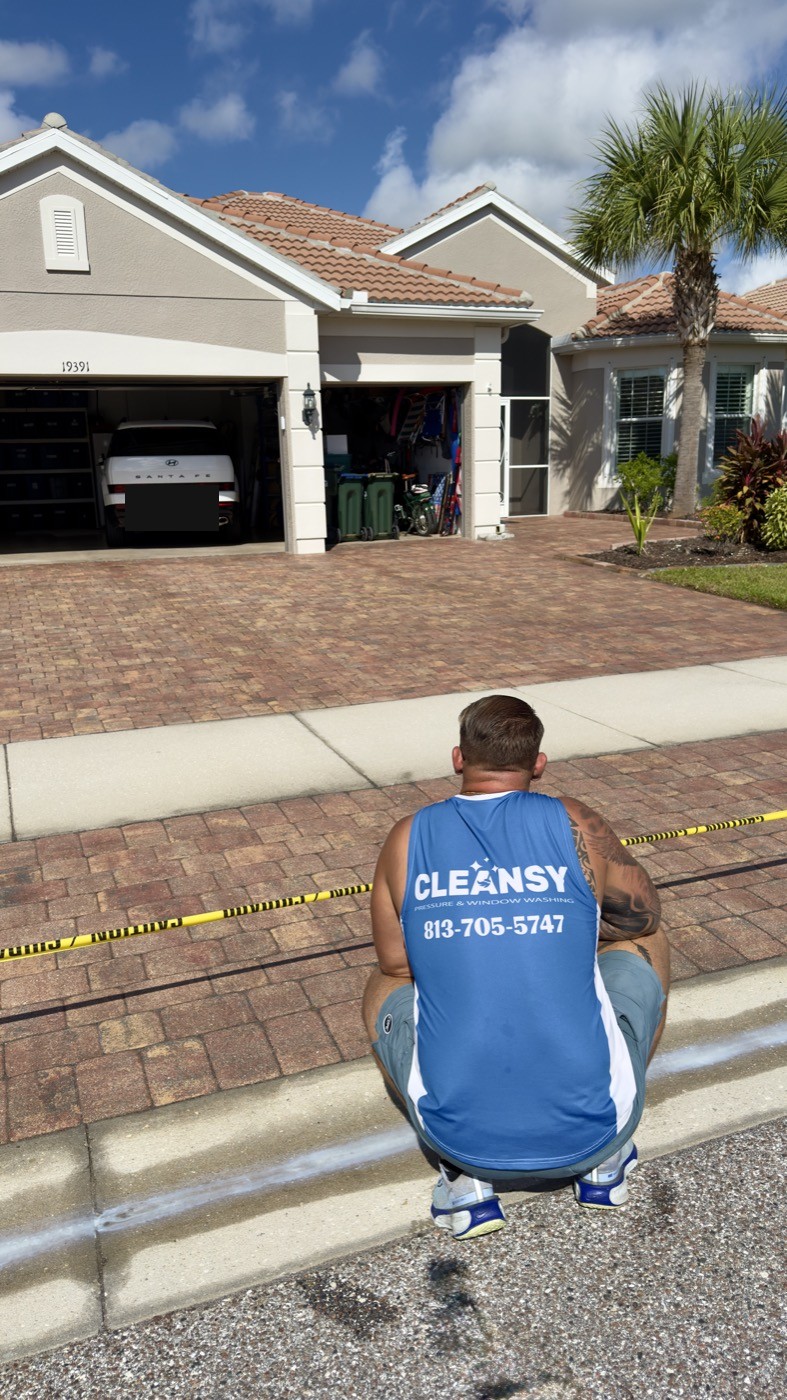
After that, it's mostly about patience. Plan for light foot traffic after about 24 hours and full vehicle weight after a few days, so the sealer has time to fully cure before it takes any real load.
Not Just Driveways: Pool Decks and Travertine Too
Sealing isn't limited to concrete paver driveways. Travertine, a natural stone common on Sarasota-area pool decks and lanais, benefits from the same protection, and arguably needs it more. Pool decks deal with constant splash-out, sunscreen residue, and chlorine exposure on top of the usual sun and rain. A sealed travertine deck holds its color better and is easier to keep looking finished between cleanings than bare stone left exposed to all of that.
If pool safety is a concern, it's worth asking about a slip-resistant sealer finish for the areas right at the water's edge. See our paver & travertine cleaning and sealing page for pricing, or our lanai and pool cage cleaning service if the screen enclosure needs attention too.
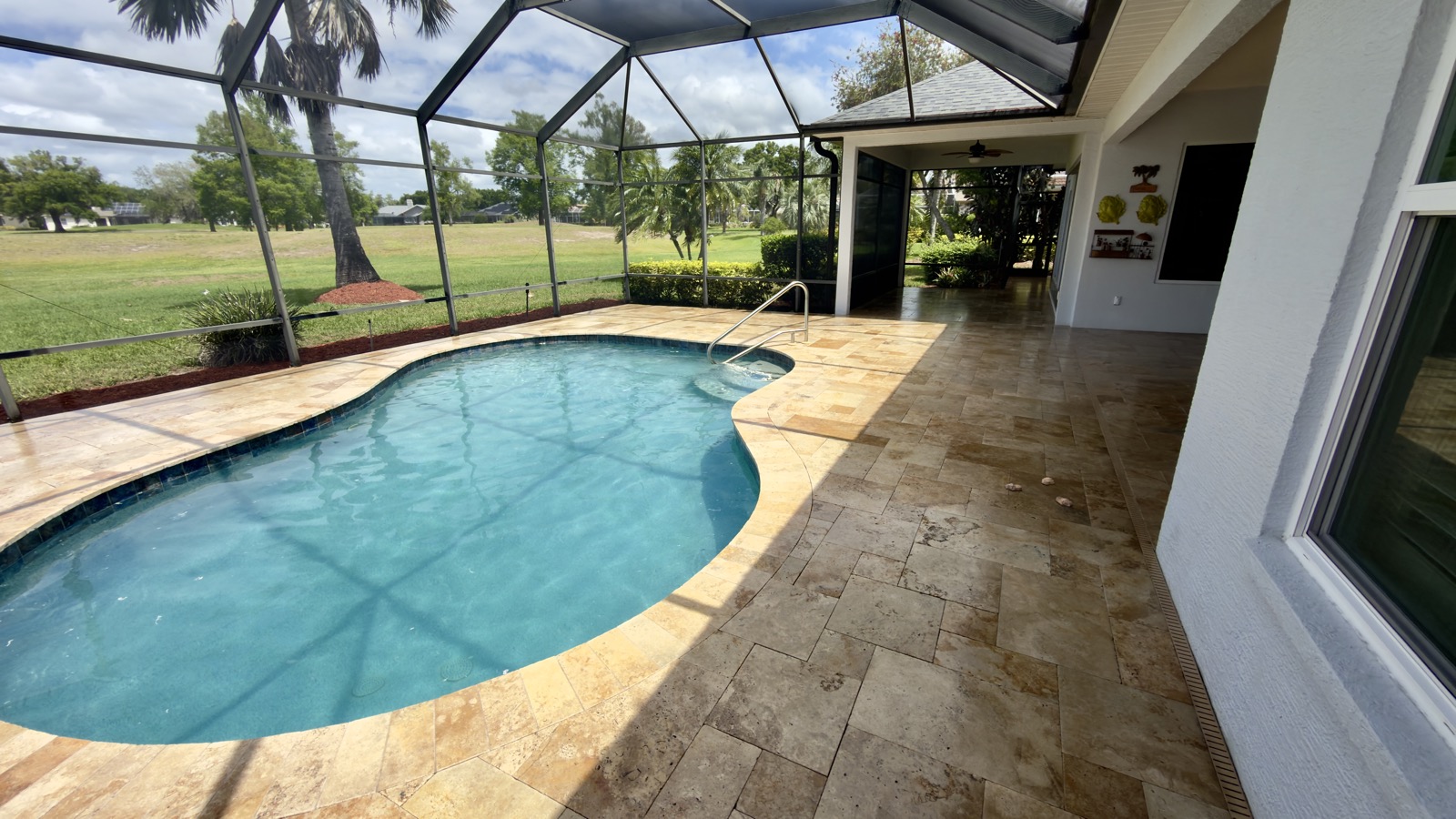
More Real Sarasota-Area Sealing Jobs
A few more shots from recent travertine and paver sealing jobs around the area. Click any photo for a closer look.
Paver Sealing FAQs
How often should you reseal pavers in Florida?
Most quality sealants last two to three years in Florida's climate before they need to be reapplied, depending on sun exposure, foot traffic, and the sealant used. High-traffic, unshaded surfaces like a south-facing driveway or an open pool deck tend to need it closer to the two-year mark. A shaded, low-traffic walkway can often stretch longer.
What's the easiest way to tell if my pavers need resealing?
Water. If a light rain still beads up on the surface, the sealer's doing its job. If it soaks in instead, that's the clearest sign the sealer has worn through and it's time to reseal.
Do you clean and seal pool decks, or just driveways?
All paver and travertine surfaces: driveways, walkways, and pool decks. Pool decks and other unshaded surfaces usually need resealing more often, since they take the most direct sun and, for pool decks, extra exposure to splash-out and chlorine.
Can you seal over efflorescence or existing stains?
Not directly. Efflorescence and stains need to be cleaned off first. Sealing over them just traps the problem underneath instead of fixing it, so cleaning always comes before sealing in our process.
How soon can I use my driveway or pool deck after sealing?
Plan for light foot traffic after about 24 hours and full vehicle weight after a few days, so the sealer has time to fully cure. Exact timing depends on the sealant and weather conditions, and we'll give you specifics for your job.