
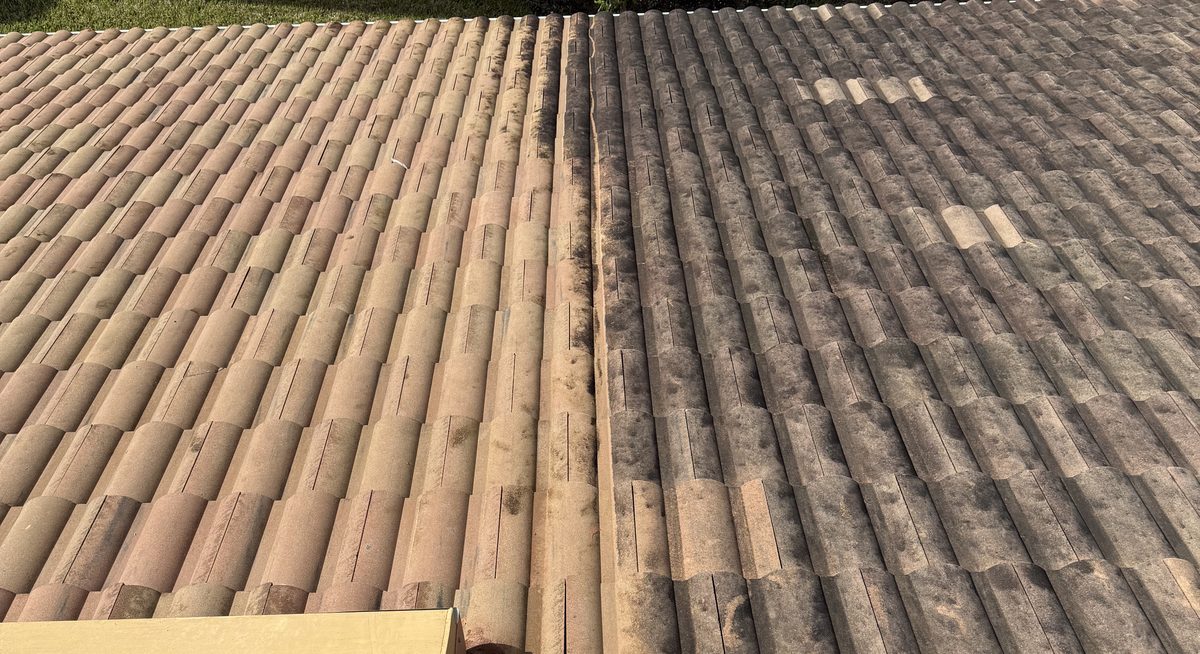
What's Causing the Black Streaks
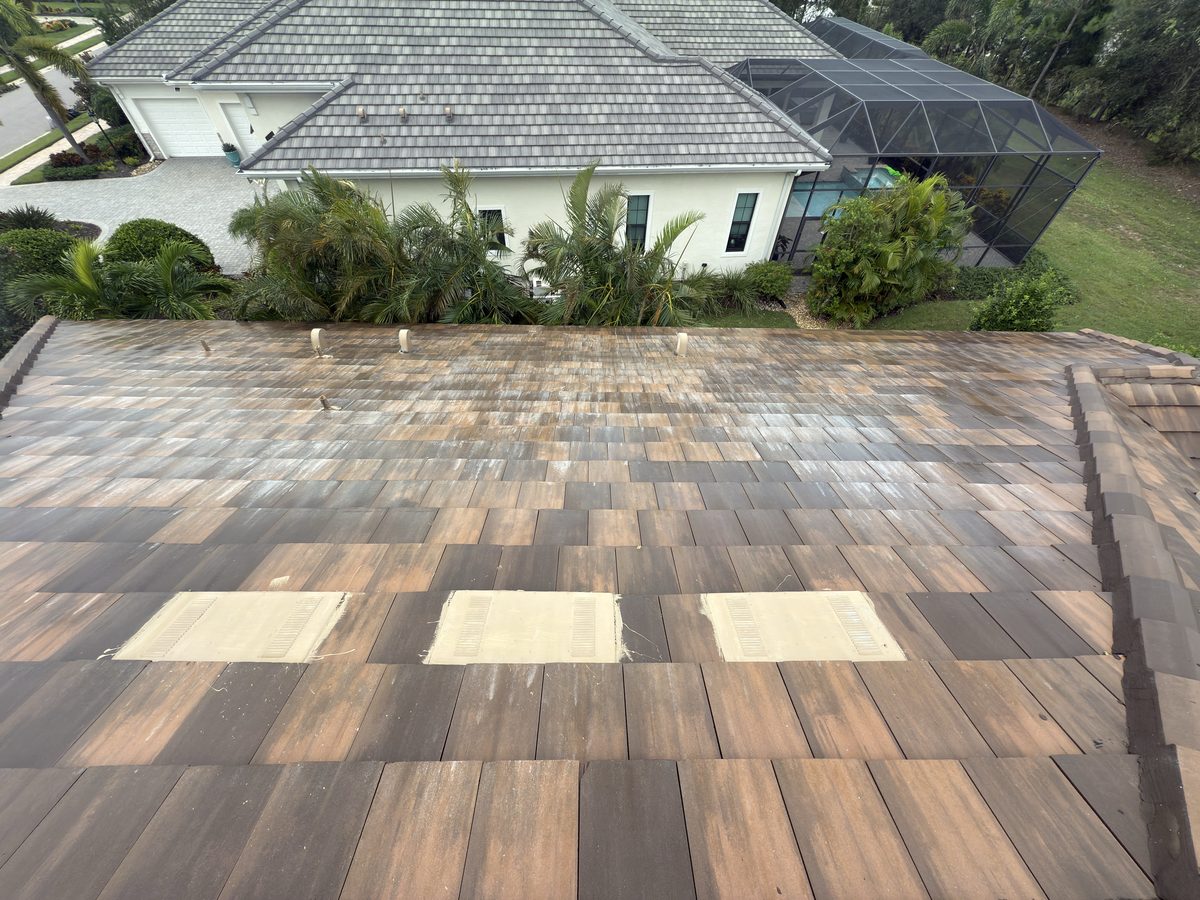
Those dark streaks and blotches aren't dirt, soot, or mildew. In the vast majority of cases, they're algae, most commonly a species called Gloeocapsa magma. It's carried through the air by wind and rain and settles on roofing structures, where it takes hold and spreads.
Here's the part that trips people up: the algae itself isn't black. It's naturally blue-green, but as it grows it produces a dark, UV-resistant outer coating to protect itself from the sun, and that dark coating is what you're seeing streak down your shingles or tile. It's a survival mechanism for the organism, not a sign your roofing material is aging, staining, or failing on its own.
Why This Happens So Fast on Florida Roofs
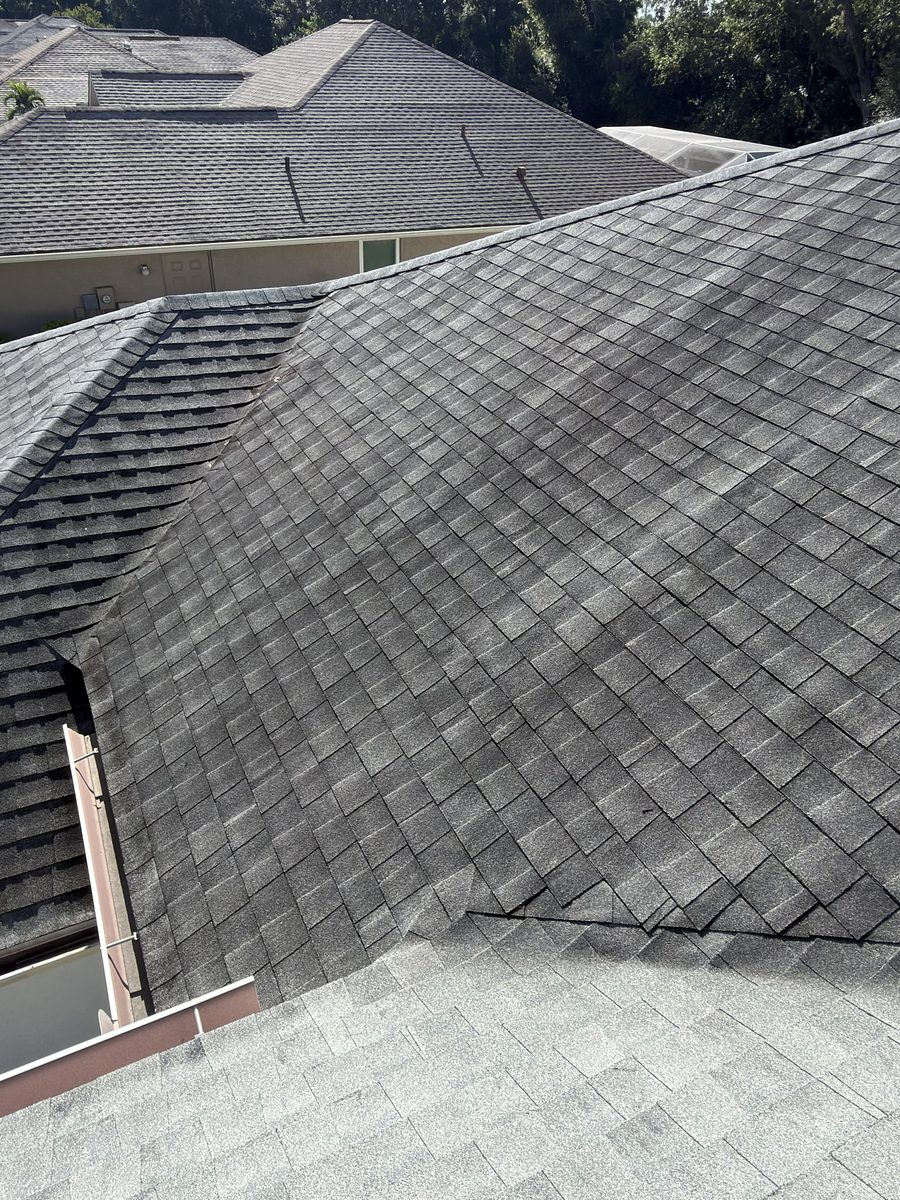
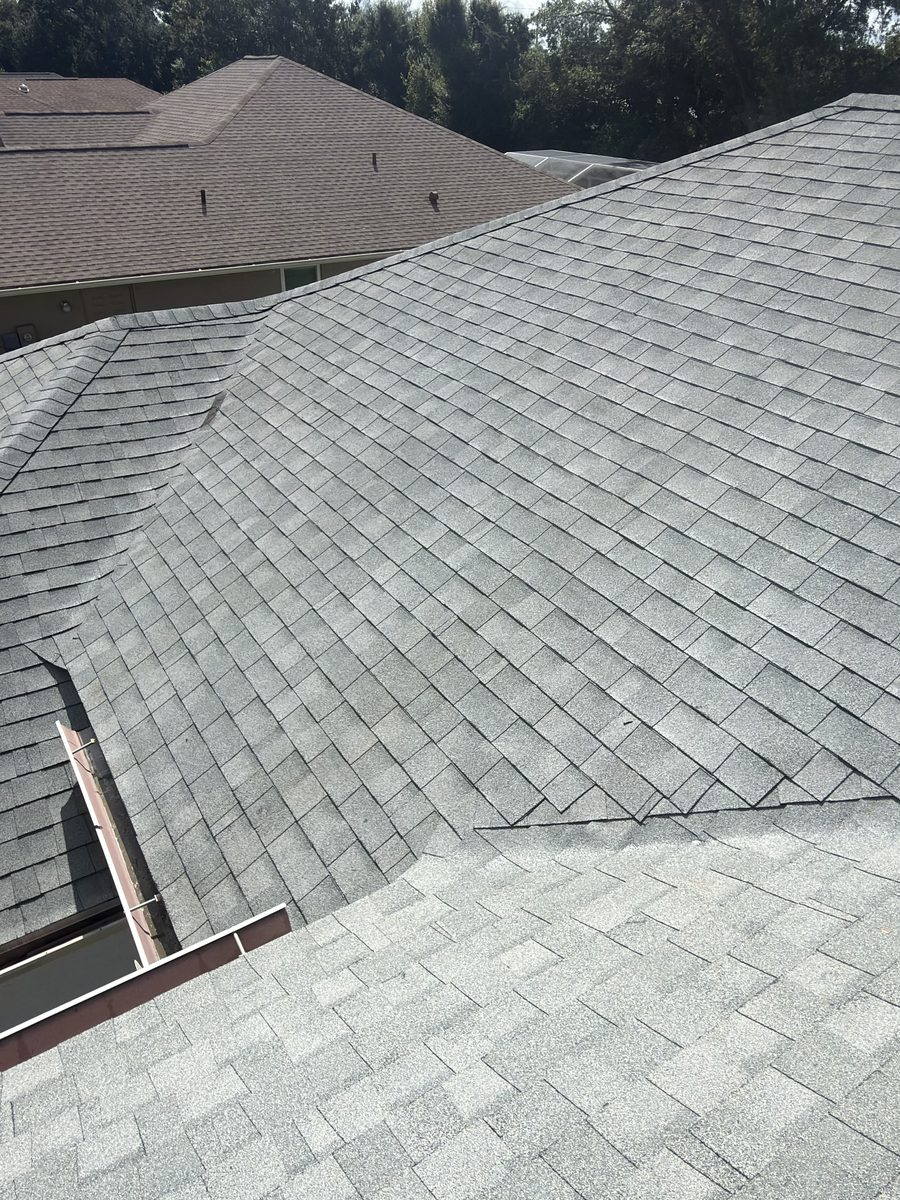
Algae growth shows up most in warm, humid climates, and the Gulf States are specifically called out as one of the regions most affected. Sarasota and Manatee County check every box it needs: near-constant humidity, heavy rainfall, and long, hot stretches that never really let a roof fully dry out. Add mature tree canopy shading parts of most roofs, and you've got ideal conditions for it to spread year-round instead of dying back in a cold winter like it would farther north.
It also tends to show up first on the side of the roof that gets the least direct sun (often the north-facing slope, or any section shaded by a tree or a taller part of the house) since that's where moisture lingers longest after rain. If your streaking is worse on one side of the roof than another, that's exactly why.
Does It Damage the Roof, or Just Stain It?
Mostly, it's cosmetic. The Asphalt Roofing Manufacturers Association's own guidance on the subject focuses entirely on the discoloration itself, not structural failure. But there's a real caveat for asphalt shingle roofs specifically: the algae feeds on the limestone filler mixed into shingle granules, and as it does, it can contribute to those granules loosening and washing away faster than they otherwise would. Those granules are the shingle's actual UV shield, so while the algae isn't eating through your roof deck, it's not doing an aging shingle any favors either.
Tile and metal roofs don't have that same granule-loss concern, but the staining itself can still make a well-maintained home look neglected from the street, and it's usually the first thing a buyer's inspector or a nosy neighbor notices.
Why You Shouldn't Pressure Wash It Off Yourself
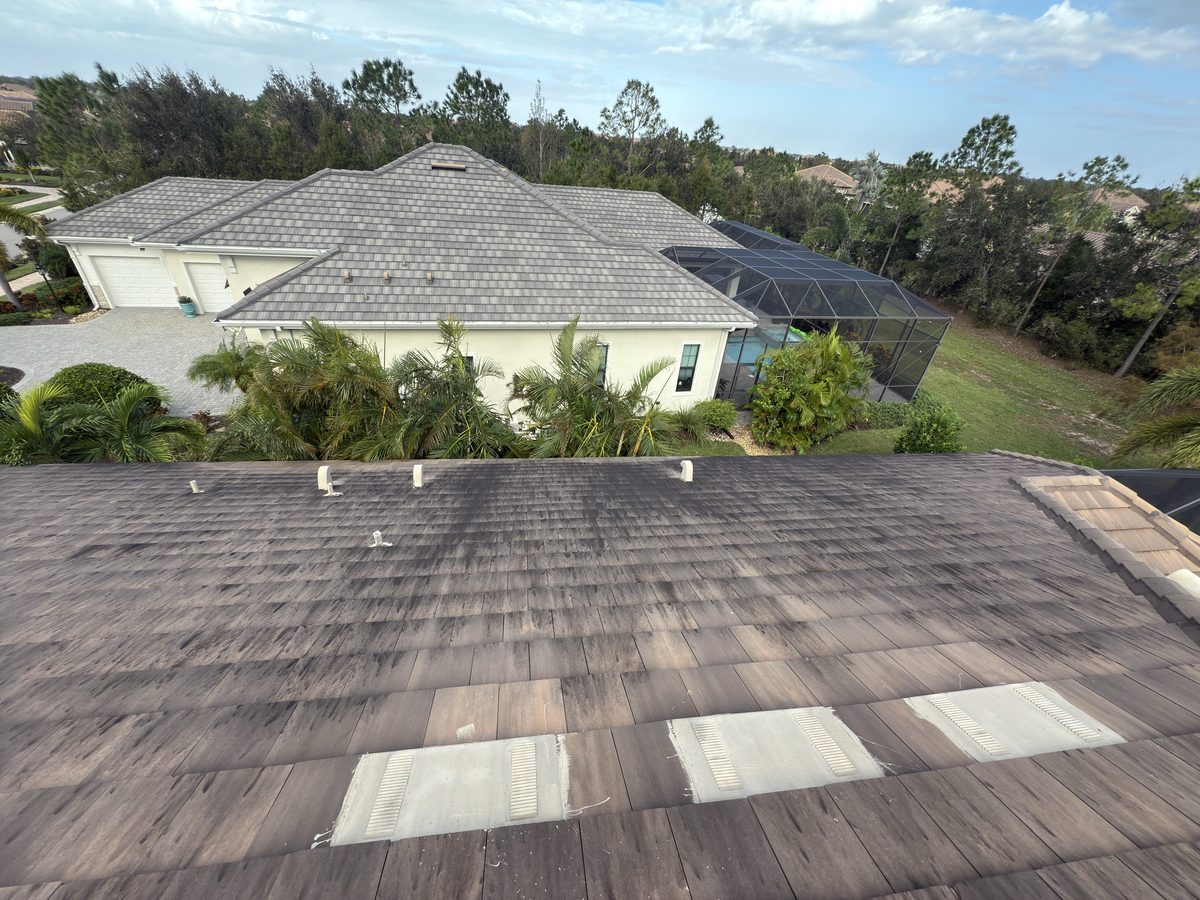
It's tempting to point a rented pressure washer at it and blast it away, but that's the one thing every roofing manufacturer specifically warns against. High pressure strips the same protective granules the algae is already after, and on tile it can crack, chip, or dislodge pieces outright, trading a cosmetic problem for a structural one. We've written a full breakdown of why pressure washing and soft washing aren't interchangeable if you want the complete picture on which method is safe for which surface.
The safe, effective approach is soft washing: low pressure, similar to a garden hose, paired with a cleaning solution that kills the algae at the root instead of just blasting the surface layer off. That's also the method roofing manufacturers themselves recommend for exactly this reason.
How Cleansy Safely Removes It
We soft wash roofs (shingle, tile, or metal) using low-pressure equipment and a cleaning solution formulated to kill algae and mildew at the root, not just rinse the surface. Because we're not relying on force, it's safe for the roofing material while still getting the actual organism causing the discoloration, not just the visible streak.
Algae spores are airborne and will eventually land on every roof in the area again. That's just how Florida works. But since soft washing kills it rather than just rinsing it, it typically takes noticeably longer to come back than after a plain pressure rinse, especially if it's caught early on a regular schedule instead of left to spread across the whole roof.
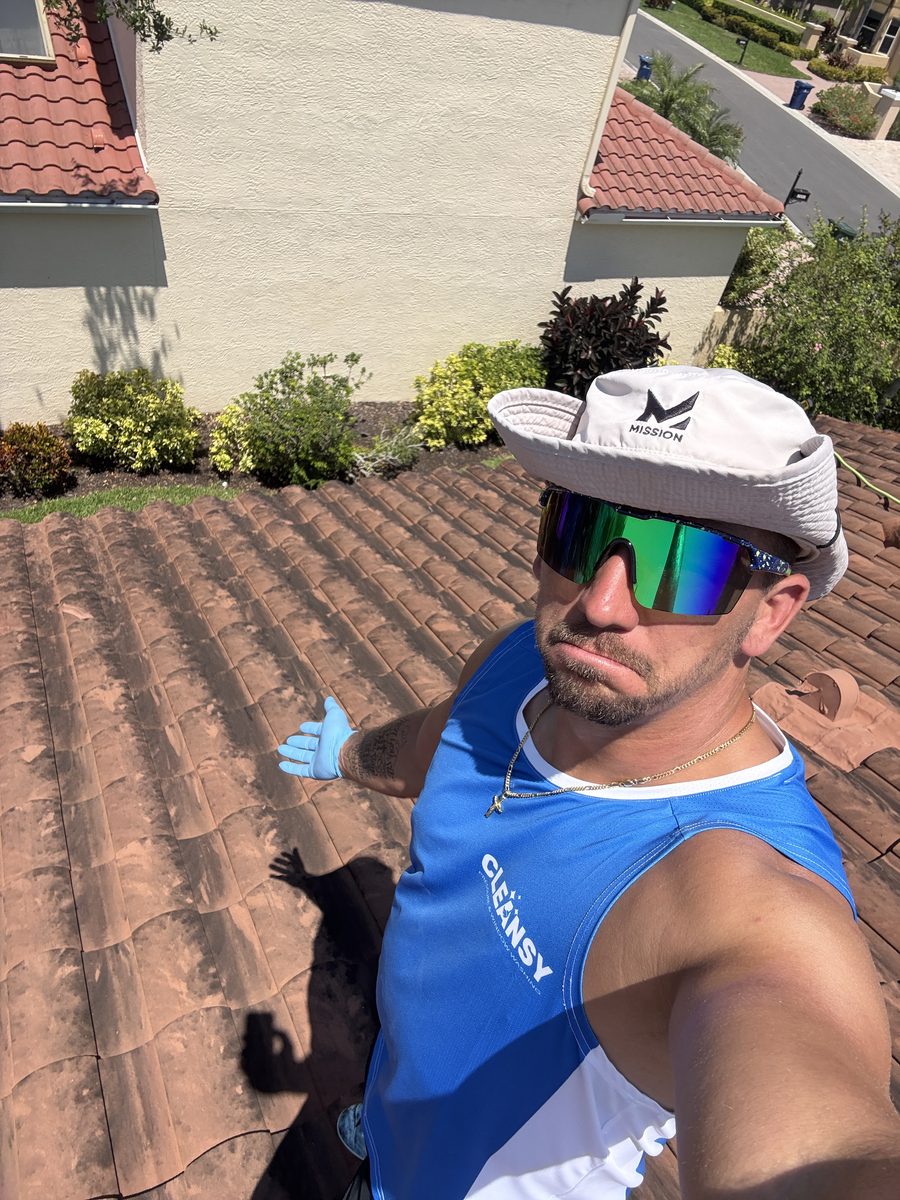
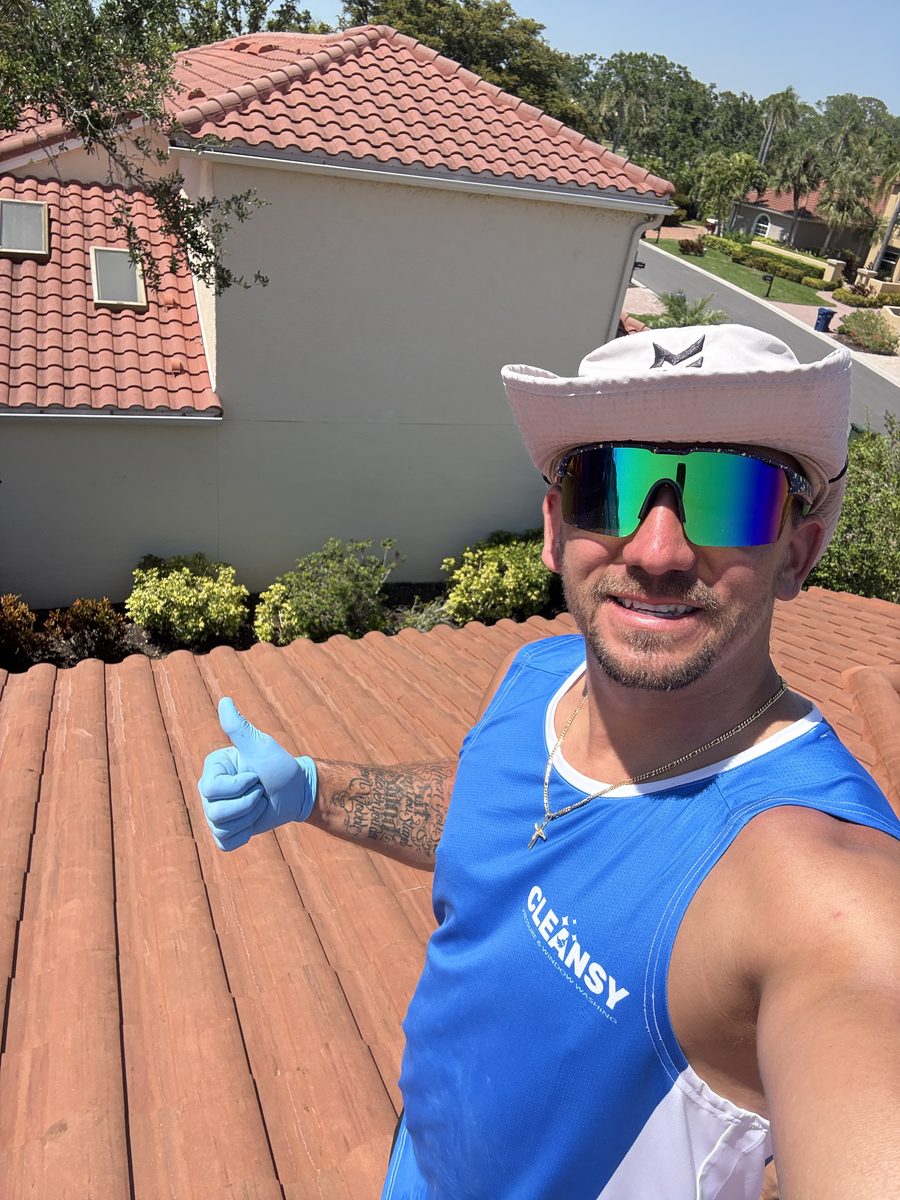
More Real Sarasota Roofs We've Cleaned
A few more before-and-afters from recent jobs around Sarasota and Manatee County. Click any photo for a closer look.
Roof Algae FAQs
Why is my roof turning black?
It's almost always algae, most commonly a species called Gloeocapsa magma. It's carried by wind and rain, lands on your roof, and grows a dark protective coating to shield itself from UV light, which is why it looks black or dark brown rather than the blue-green color it really is.
Is the black on my roof mold, mildew, or soot?
No. It's algae, not mold, mildew, or soot buildup. It typically shows up first on the side of the roof that gets the least direct sun, since that's where moisture sticks around longest, and spreads from there.
Does roof algae damage the roof, or just stain it?
According to the Asphalt Roofing Manufacturers Association, the discoloration itself is primarily cosmetic. But on asphalt shingle roofs, the algae feeds on the limestone filler in the shingle granules, which can contribute to granule loss over time, and those granules are the shingle's actual UV and weather protection.
Can I pressure wash the algae off my roof myself?
You shouldn't. High pressure strips the protective granules off shingles and can crack or dislodge tile, causing more damage than the algae itself. Soft washing (low pressure plus a cleaning solution that kills the algae at the root) is the method roofing manufacturers recommend.
Will the black streaks come back after cleaning?
Algae can return over time since the spores are airborne and constantly landing on every roof in the area. That's just Florida. Soft washing kills it at the root rather than just rinsing the surface, so it typically takes noticeably longer to return than after a plain rinse, especially with a regular care plan to catch new growth early.