

Watch It Done Live
This is the full process, start to finish, filmed on a real job. The steps below break it down.
What You'll Need
- A squeegee with clean, sharp rubber
- A scrubber (a strip washer with a microfiber sleeve) or a soft sponge
- A bucket of water with a small amount of soap
- A plastic polish pad, or the rough side of a dish sponge
- At least three clean, dry cloths
For soap, a small amount of dish soap like Dawn works well when you're doing your own windows, and one pinch in the bucket is enough. We don't use it professionally. On our jobs it can leave a fine residue that collects dust over time, so we mix three professional-grade window soaps instead. That's our own experience after 9 years in this industry, not a lab result. There's more in what's included in a Cleansy window cleaning.
About the cloths: brand-new microfiber can leave streaks. An old, unused T-shirt, or even a clean sock, often works better.
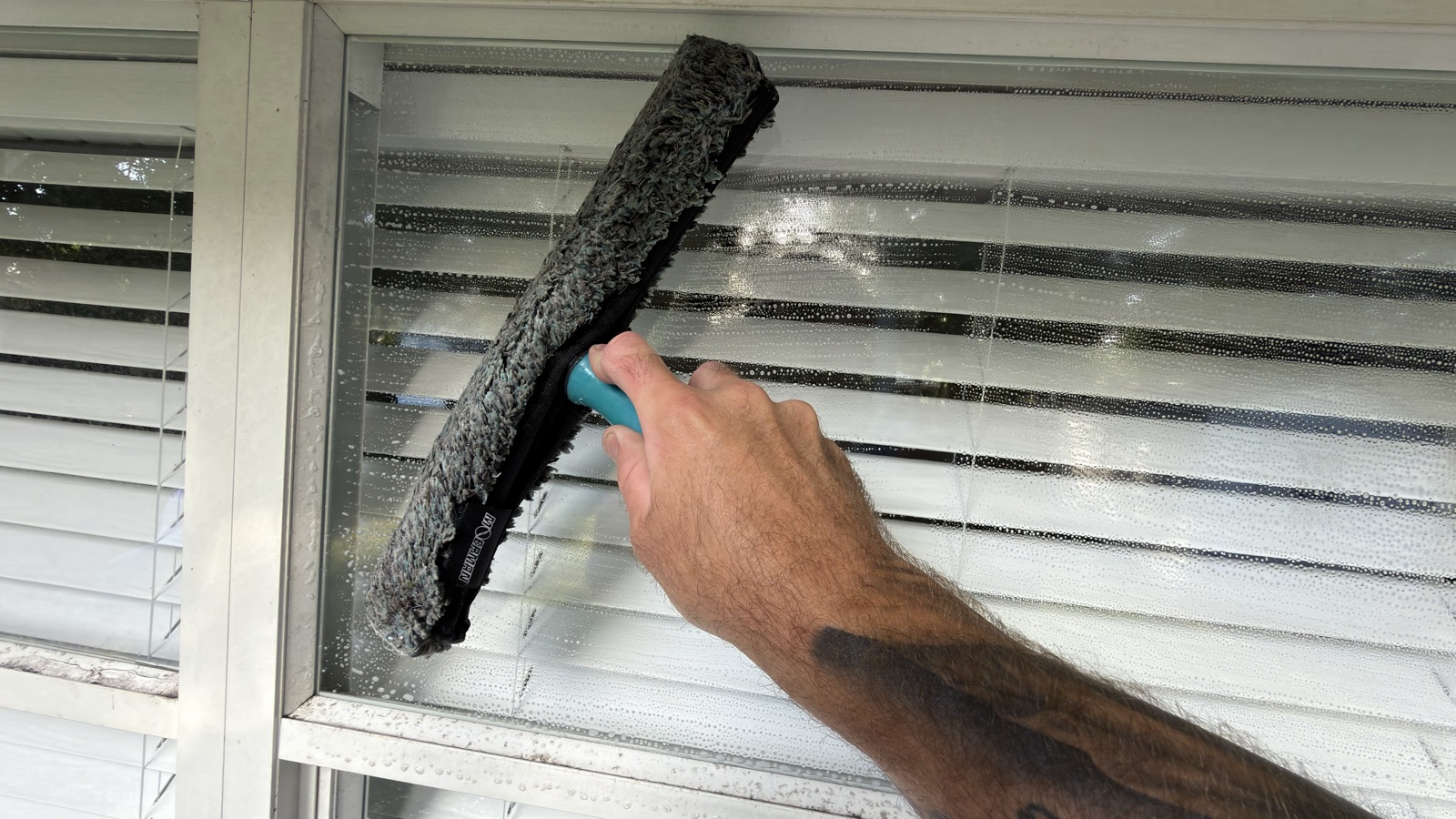
Step 1: Wet the Glass With a Scrubber
Dip the scrubber in your soapy water and wash the whole window, working from the top down. This loosens the dirt and coats the glass evenly so the squeegee can glide. Work one window at a time so the soap never dries on the glass.
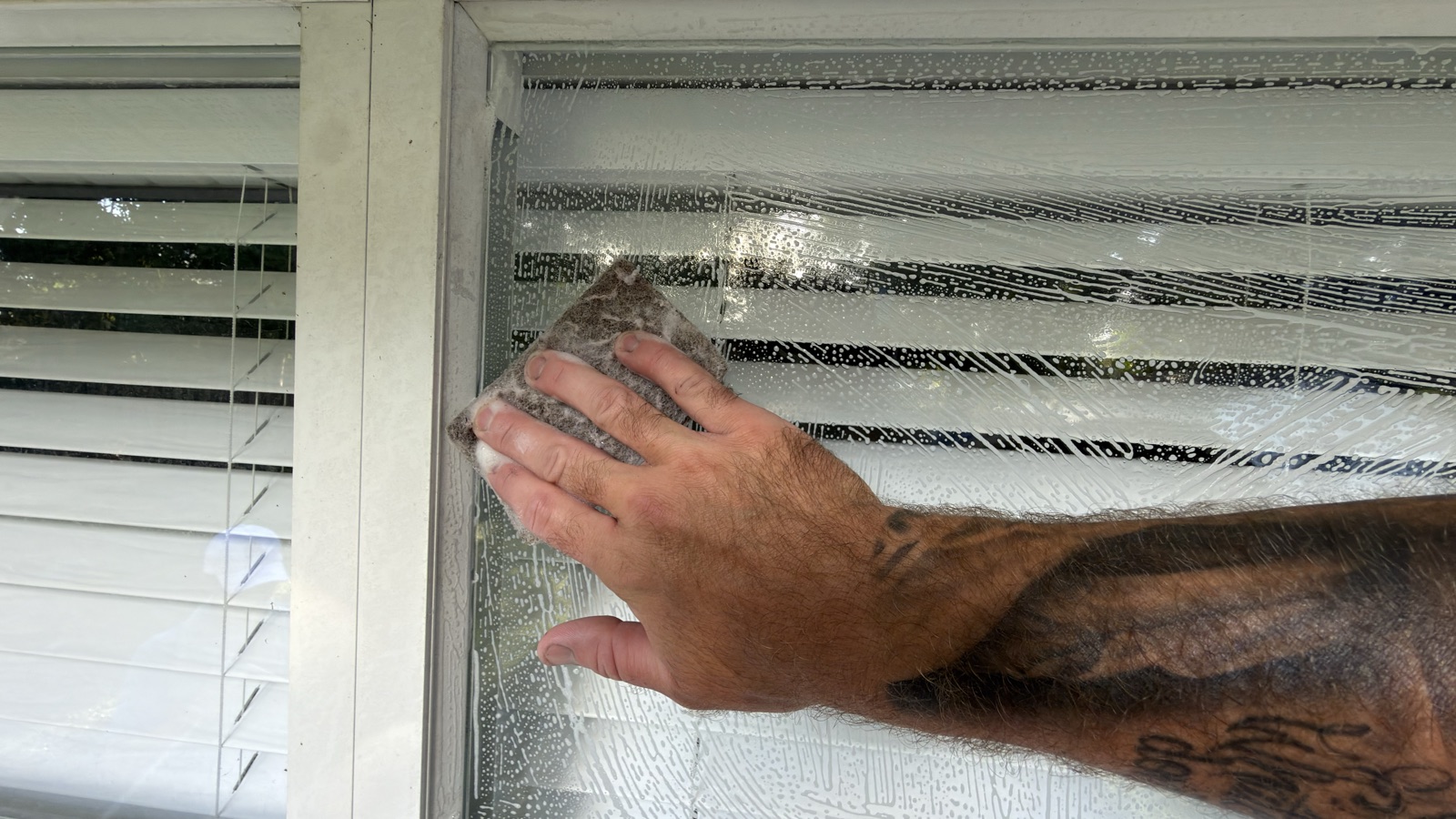
Step 2: Use a Polish Pad on Stuck-On Spots
The scrubber won't lift everything. For bug residue, sap, and dried spots, and along the edges and corners where dirt collects, work a plastic polish pad or the rough side of a dish sponge over the wet glass in small circles.
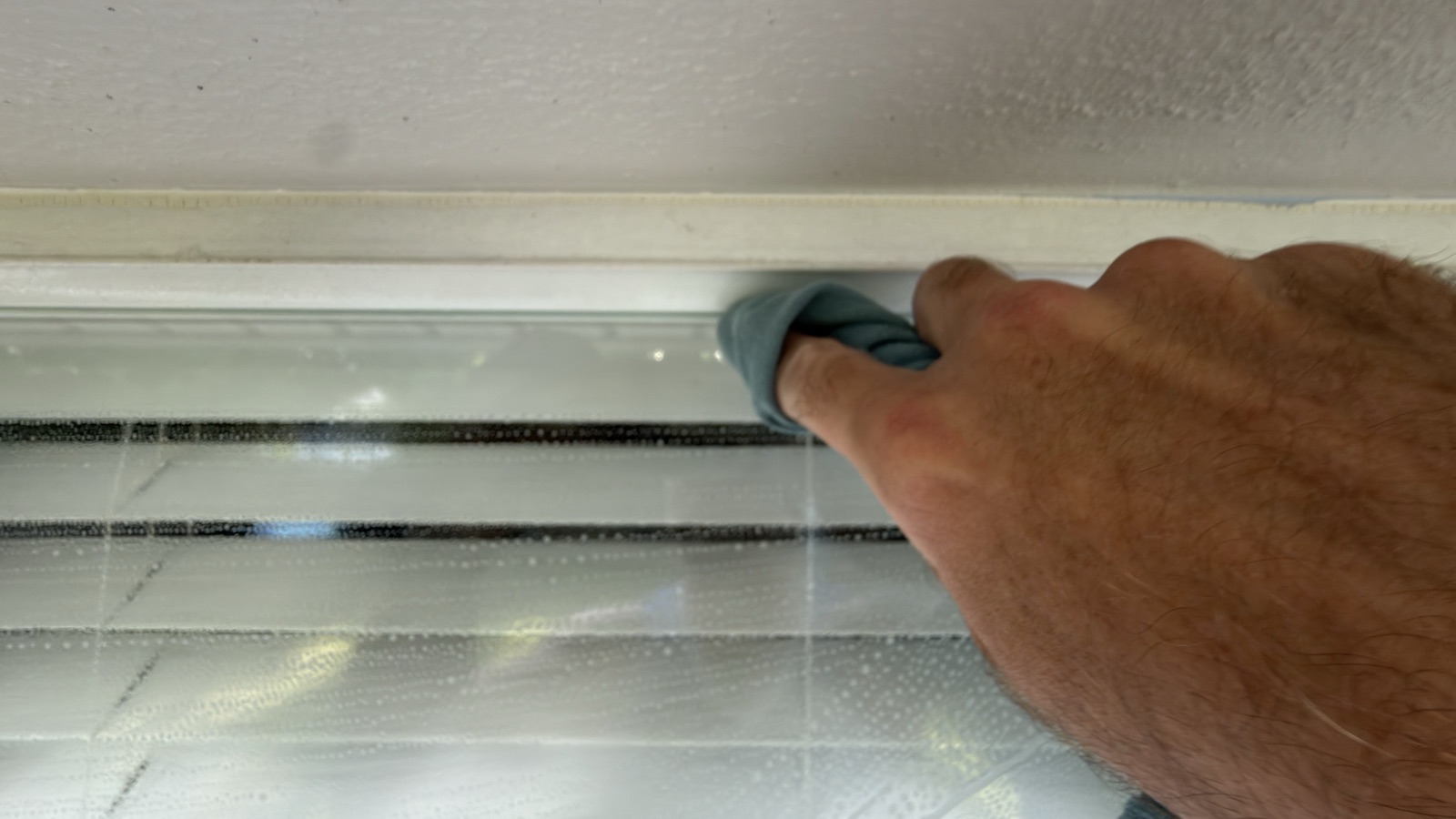
Step 3: Wipe a Dry Line Along the Top Edge
Before you squeegee, wipe a thin, dry line along the top edge of the glass with a cloth. Always leave a dry line along the top. It stops water from running back down over glass you've already cleaned. If the squeegee doesn't fit along the top, the side edge works too, but you still need that top line.
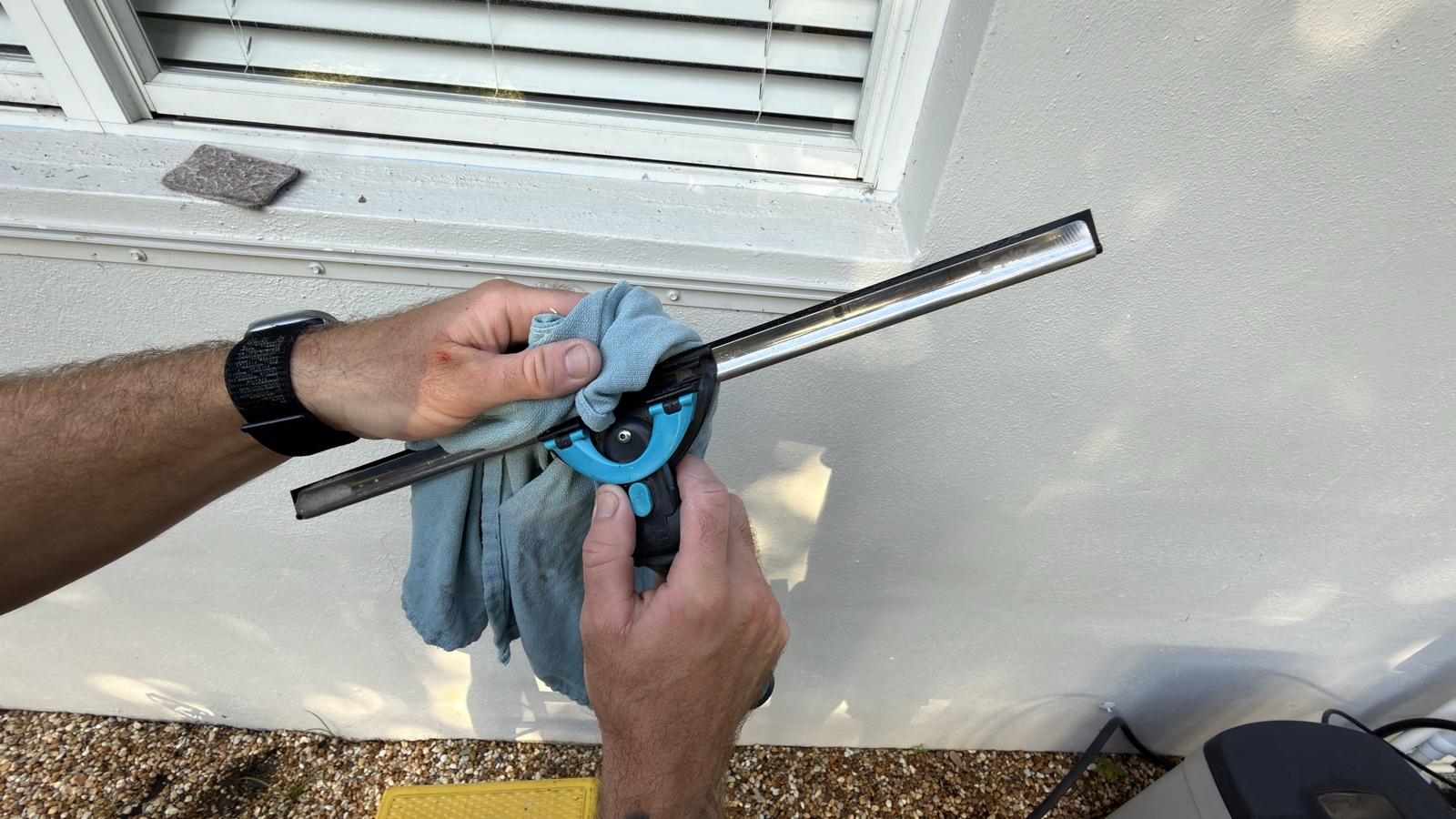
Step 4: Dry the Squeegee Blade
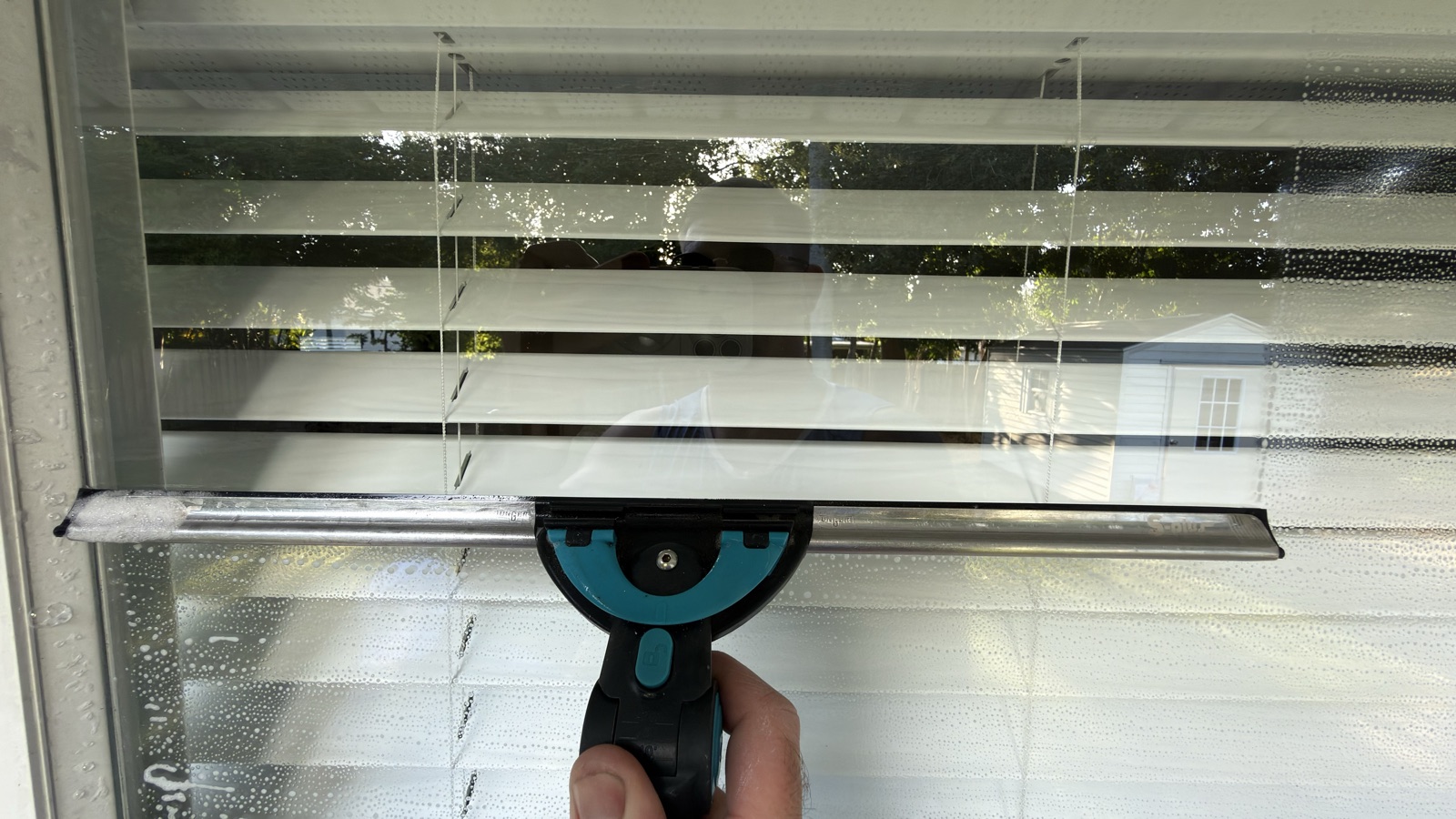
Wipe the rubber blade with a dry cloth before your first pull, and again after each pull. Water and dirt left on the blade are what put streaks back onto clean glass.
Step 5: One Straight Pull
Starting at the dry line, pull the squeegee straight down in one smooth motion. You don't need much pressure, because the blade does the work. Overlap each pull slightly, and don't lift the blade in the middle of a stroke, or it leaves a line.
Step 6: Detail the Edges
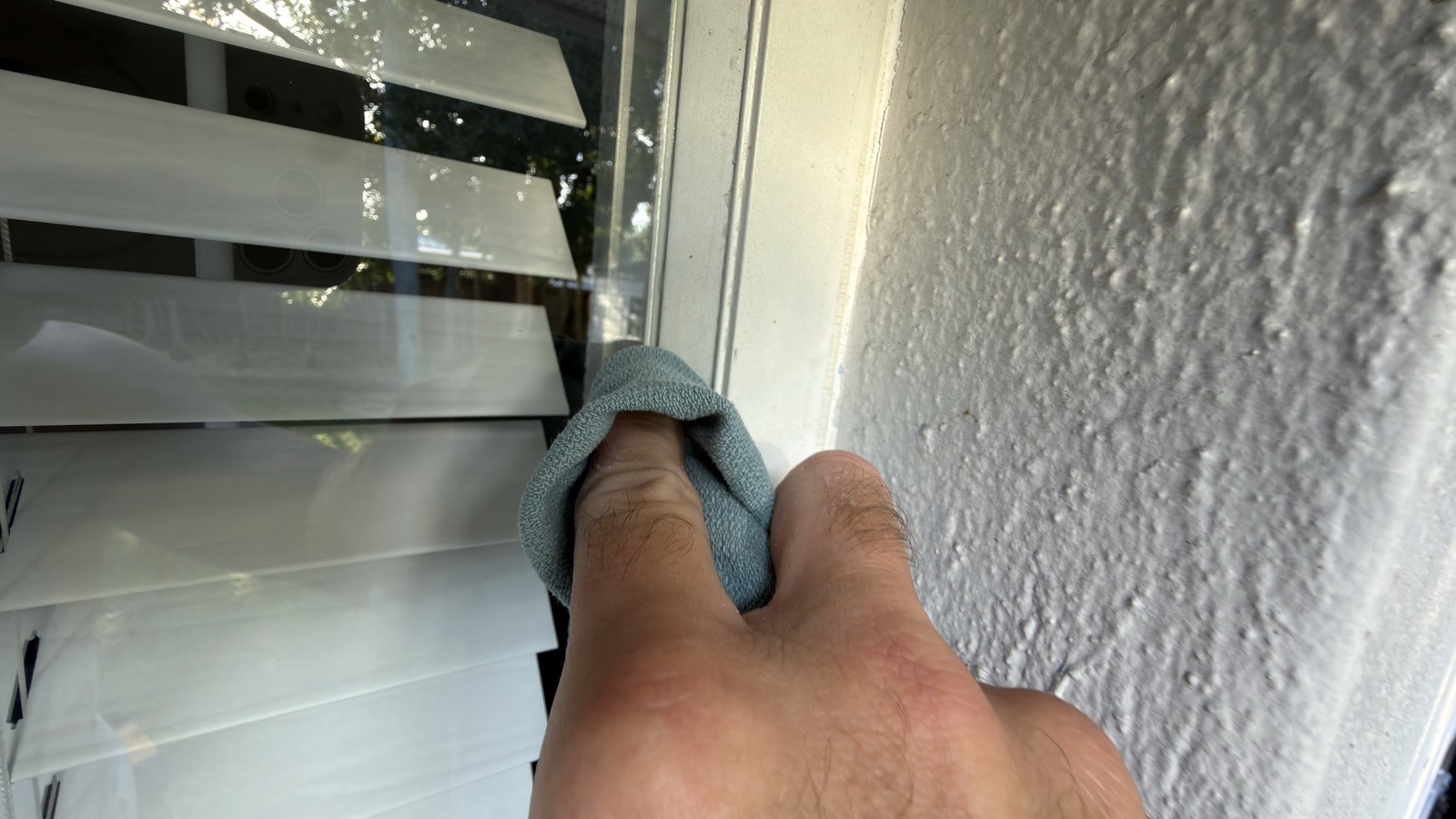
Finish with a clean, dry cloth around the frame and corners to pick up the drips the squeegee leaves behind. Then step back and look at the glass from an angle to catch anything you missed.
Four Common Mistakes
These four cause a lot of streaky windows:
- Old squeegee rubber. Rubber that's worn, nicked, or hardened stops giving a clean edge and leaves lines, so replace it when it does.
- Too much pressure. Pressing hard doesn't clean better, and it can leave streaks.
- Too steep an angle. Hold the squeegee at a shallow angle so the blade glides instead of skipping.
- Too much soap. One pinch of dish soap in the bucket is enough, because extra soap just leaves a film to squeegee away.
When to Call a Pro
Some windows are worth handing off. Second-story and high windows are safer cleaned from the ground with a water-fed pole than from a ladder. Hard water spotting that won't wipe off is a different problem than dirt, and we cover it in why windows still look cloudy after cleaning. Fogging between the panes means the seal has failed, which no amount of cleaning fixes. See foggy windows between the panes.
We clean windows inside and out across Sarasota and Manatee County, including tracks, sills, and screens. If you'd rather skip the ladder, our window cleaning page has the details, and a Window Care Plan keeps them clean all year.
Window Cleaning Tips FAQs
What's the best way to clean windows without streaks?
Wash the glass with a scrubber and soapy water, wipe a dry line along the top edge, dry your squeegee blade, and pull straight down in one smooth motion with light pressure. Wipe the blade after each pull, and finish the edges with a clean, dry cloth.
What soap should I use to clean windows at home?
A small amount of dish soap like Dawn works well when you're cleaning your own windows. One pinch in a bucket is enough, because extra soap leaves a film. Professionals like us use professional-grade window soaps instead.
Why are my windows still streaky after cleaning?
The usual causes are worn squeegee rubber, pressing too hard, holding the squeegee at too steep an angle, and using too much soap. Brand-new microfiber cloths can leave streaks too. If spots remain after a proper clean, it may be hard water staining, which needs a different approach.
Do I need a special scrub pad?
No. A plastic polish pad works for stuck-on spots and edges, and so does the rough side of a dish sponge.
How often should windows be cleaned in Florida?
Most homes do well with a cleaning once or twice a year. Homes near water, under trees, or that collect a lot of pollen and salt spray often benefit from more frequent visits.