
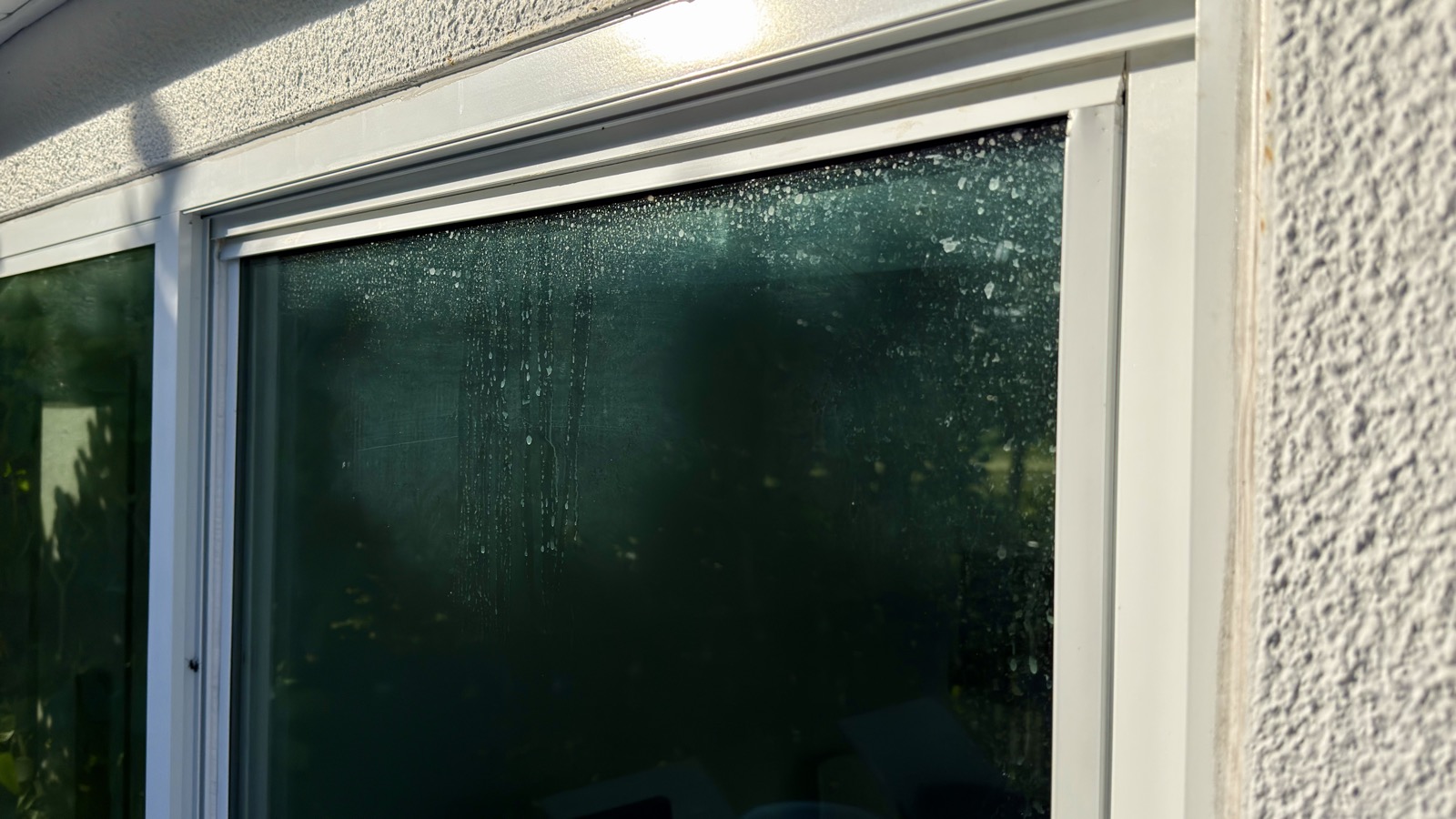
It's Probably Hard Water Staining, Not Dirt
A regular professional window cleaning service is built to lift what's sitting on top of the glass: dust, pollen, bug residue, rain film, the everyday haze that builds up between cleanings. Soap, a squeegee, and a careful pass gets all of that off, easily. See our guide to what's included in a Cleansy window cleaning for the full step-by-step.
Hard water staining is a different problem. It's dissolved minerals, mainly calcium and magnesium, left behind after water sits and dries on the glass. Under Florida sun, those minerals don't just sit on the surface, they bake into a thin white or cloudy film that's bonded to the glass itself. A normal wash glides right over it, because there's nothing loose left to wipe away.
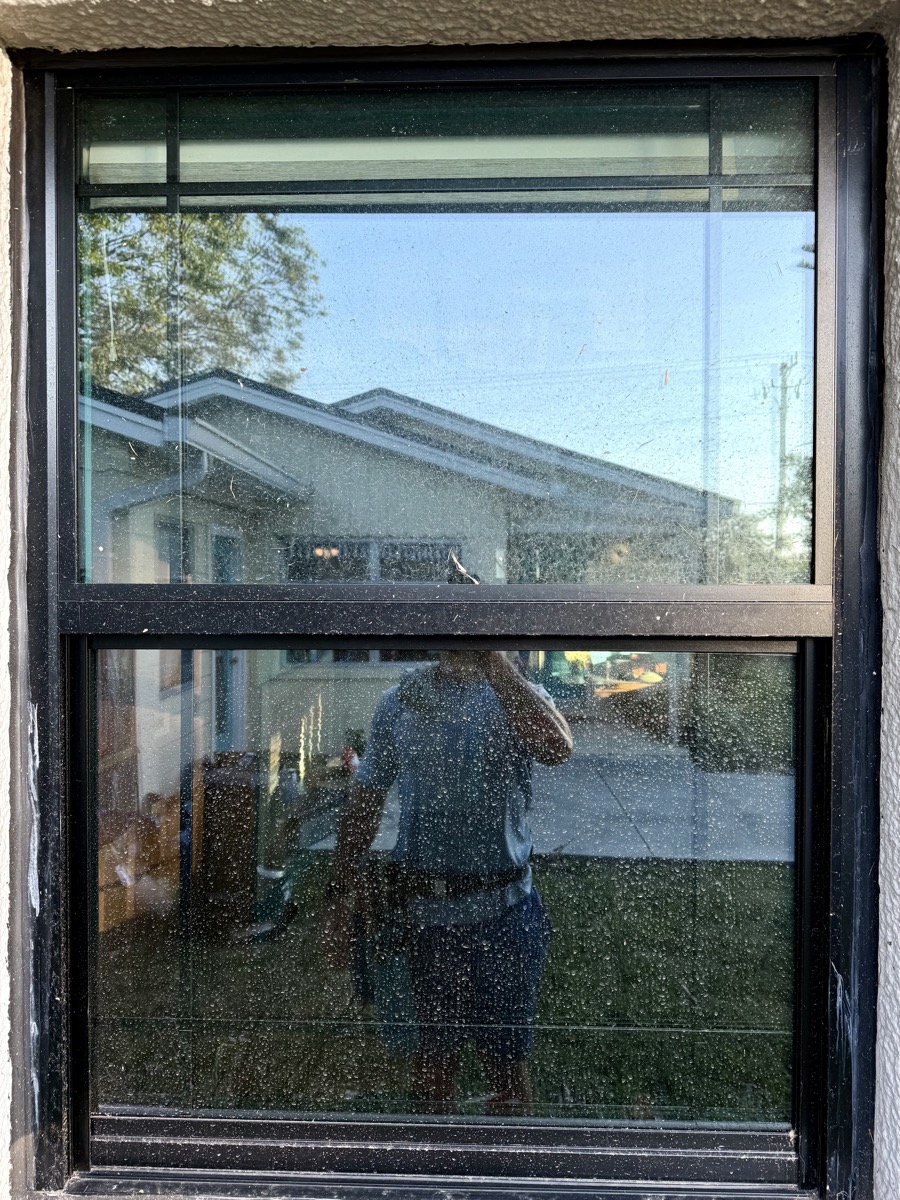
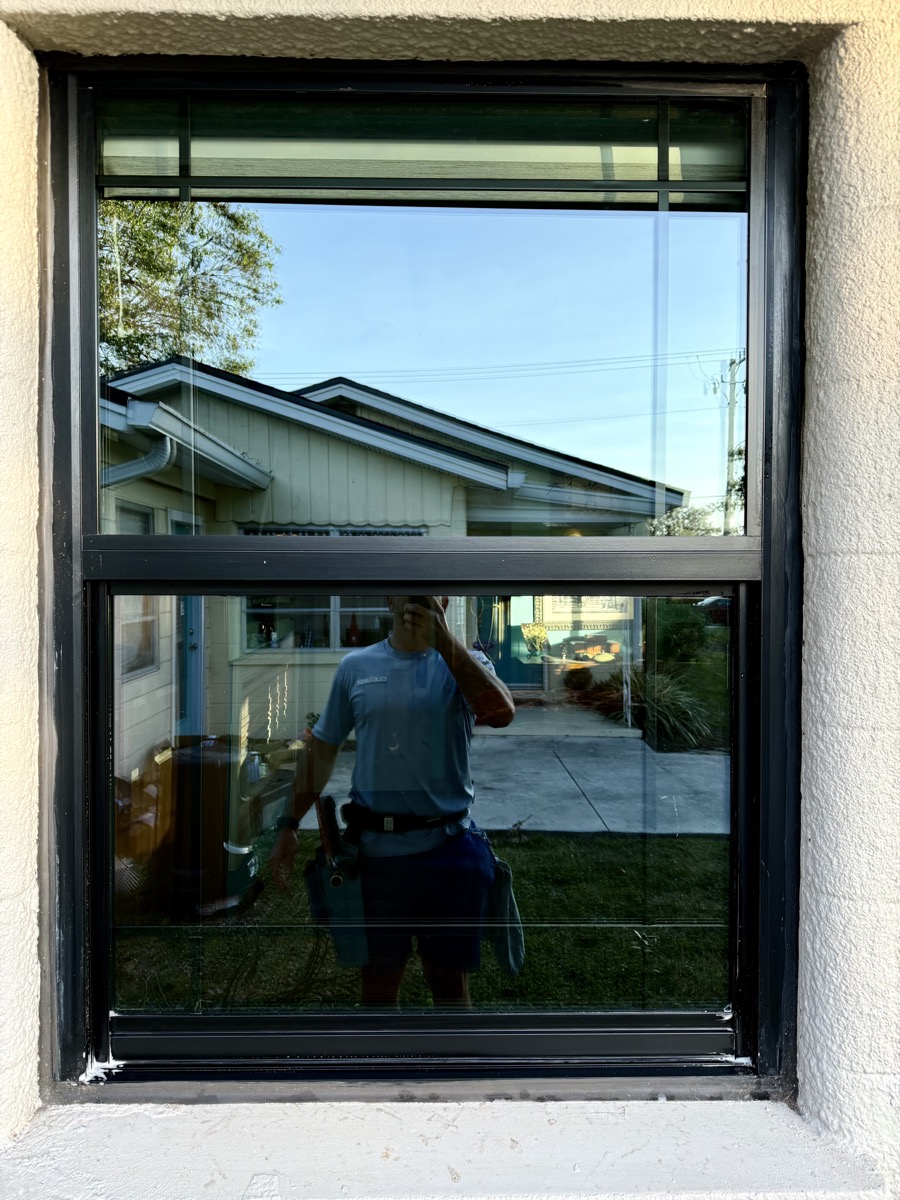
Regular Window Cleaning vs. Hard Water Stain Removal
We quote these as two different services, because they are. A regular cleaning is a soap-and-squeegee job: fast, affordable, and it's what most homes need most of the time. Removing hard water staining is closer to a restoration job: it takes a specialized descaling treatment made for glass, sometimes careful scraping on heavier spots, and multiple passes of rinsing and rechecking before the glass comes back clear.
We've had homeowners book a standard cleaning expecting it to erase years of spotting near a sprinkler line, and had to explain on-site that it's a different job with a different price. It's a conversation we'd rather have upfront, before we start, than after the fact. If you know you've got stubborn spotting, mention it when you request a quote and we'll price it accurately from the start.
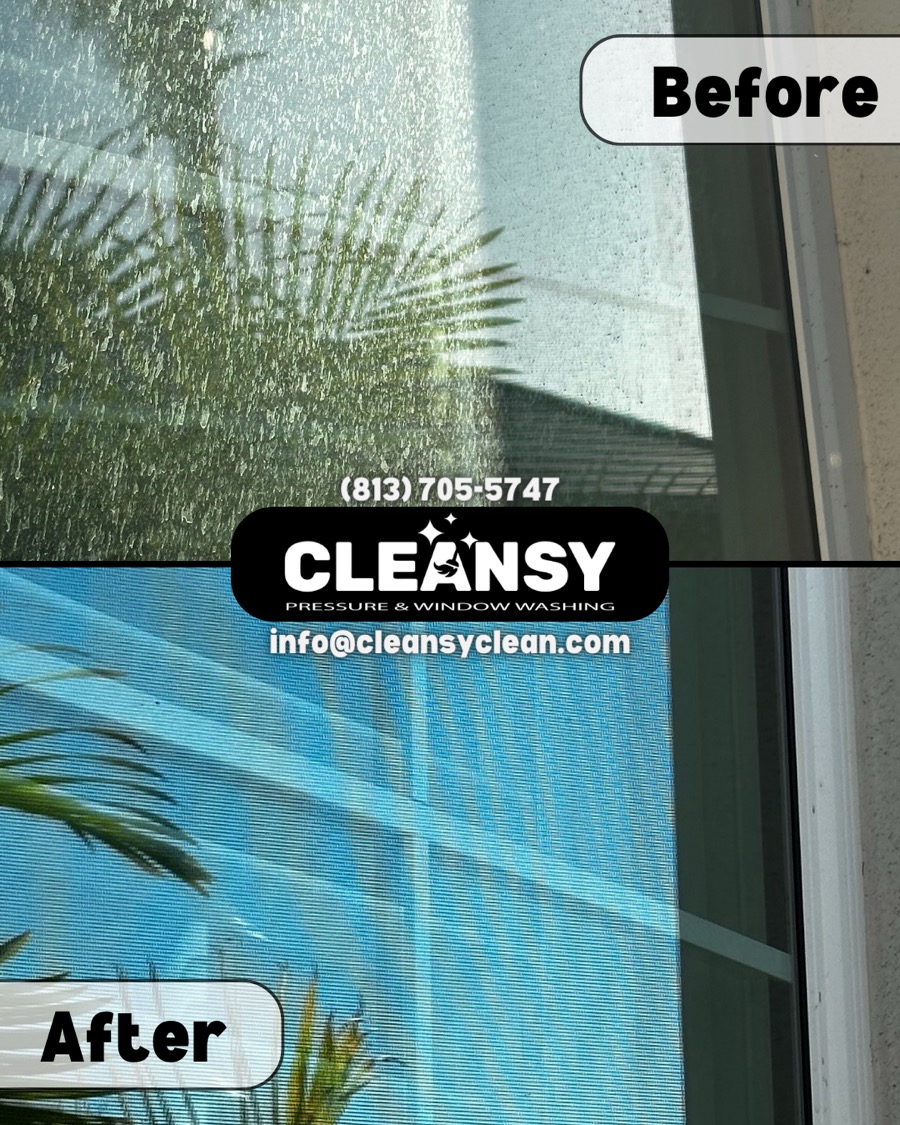
Why Hard Water Staining Shows Up So Often in Florida
A few things stack up against Sarasota-area windows specifically. Sprinkler systems are running constantly through the dry season, and a lot of irrigation here draws from well water pulled through Florida's limestone aquifer, which is naturally high in dissolved calcium, harder than most treated tap water. Every time overspray hits a window, it leaves a faint mineral film behind as it dries.
Then the sun does the rest. Intense, direct heat bakes those mineral droplets onto the glass before they can evaporate cleanly, hardening the residue instead of letting it just dry off. Do that daily for a season or two, especially on windows closest to a sprinkler head, and you end up with a stubborn, etched-looking haze that no amount of regular washing will touch.
How to Tell Hard Water Staining From an Actual Dirty Window
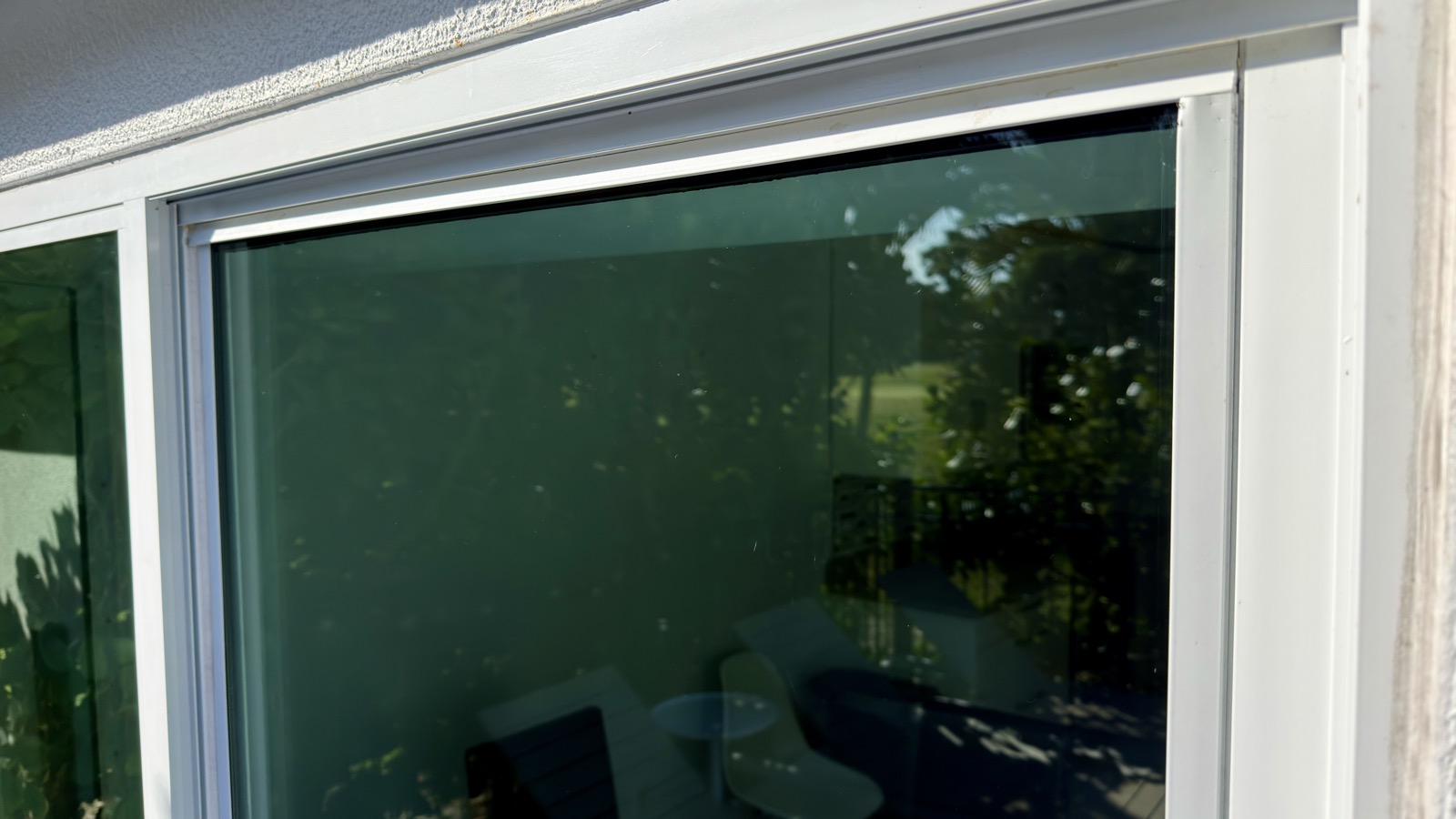
There's a quick way to check without guessing. Run a finger across the dry glass. If it feels smooth, what you're looking at is dirt or film, and a regular cleaning will take care of it. If it feels slightly rough, gritty, or almost sandy under your finger, that texture is mineral buildup, not dirt sitting on the surface.
The pattern is another clue. Hard water spotting usually shows up in a band or cluster that lines up with where a sprinkler head sprays, rather than an even haze across the whole pane. If it's worse in one section and lighter everywhere else, that's a strong sign it's mineral-related.
One more thing it isn't: if the haze sits between the two panes of glass rather than on the surface, and cleaning both sides doesn't touch it, that's a failed window seal, not staining. We cover that separately in our guide to foggy double-pane windows.
What It Actually Takes to Remove It
Removing hard water staining starts with a descaling solution formulated specifically for glass, applied and worked into the affected sections rather than the whole window at once. On heavier buildup, that sometimes means light, careful scraping with a glass-safe blade to break up the deposit without marking the glass. From there it's multiple passes of rinsing and rechecking, since minerals that thick don't always lift in one attempt.
We also check the window itself before starting: tint, coatings, and frame material all affect what treatment is safe to use, which is part of why this isn't something to DIY with whatever's under the sink. For everyday streaks that aren't hard water, see our step-by-step guide to cleaning windows without streaks. You can see what that transformation looks like in our before-and-after gallery.
What Cleansy Can Do For You
When we quote a job, if we can already see hard water spotting or sprinkler overspray from the driveway, we'll point it out and price it accurately before we ever start cleaning, not after. And if something shows up mid-job that wasn't obvious from the ground, we'll always call and explain what we're seeing and what it'll take, so there's no surprise on the invoice.
If sprinkler overspray is a recurring issue on your property, one of our Window Care Plans keeps ahead of it with regular visits, so mineral buildup gets caught and cleared early instead of sitting for a season and hardening into a bigger job. It also helps to check that your sprinkler heads aren't aimed directly at the house. EPA WaterSense recommends redirecting any sprinklers spraying onto walls or hardscapes back toward the landscape, which cuts down on new buildup between cleanings. For everything else on the property, see our guide to how often to pressure wash a Florida home.
Hard Water Staining FAQs
Will a regular window cleaning remove hard water stains?
Usually not. A regular cleaning is built to lift dust, pollen, bug residue, and rain film off the surface of the glass. Hard water staining is mineral deposits that have bonded to the glass itself, and it needs a different treatment to come off.
How do I know if my windows have hard water staining or are just dirty?
Run a finger over the dry glass. If it feels smooth, it's dirt or film. If it feels slightly rough or gritty, or the haze follows a pattern that lines up with a sprinkler head's spray zone, that's mineral buildup baked onto the surface.
What causes hard water spots on windows in Florida?
Sprinkler overspray hitting the glass daily is the most common cause, especially with the mineral-heavy well or reclaimed water many Sarasota-area irrigation systems use. Intense sun bakes those mineral droplets onto the glass before they can evaporate cleanly, and the cycle repeats every time the sprinklers run.
Does Cleansy remove hard water staining?
Yes. It's priced and scheduled separately from a regular cleaning since it takes a specialized descaling treatment and sometimes careful scraping. If we can see staining from the driveway when we quote a job, we'll flag it and price it accurately before we start.